


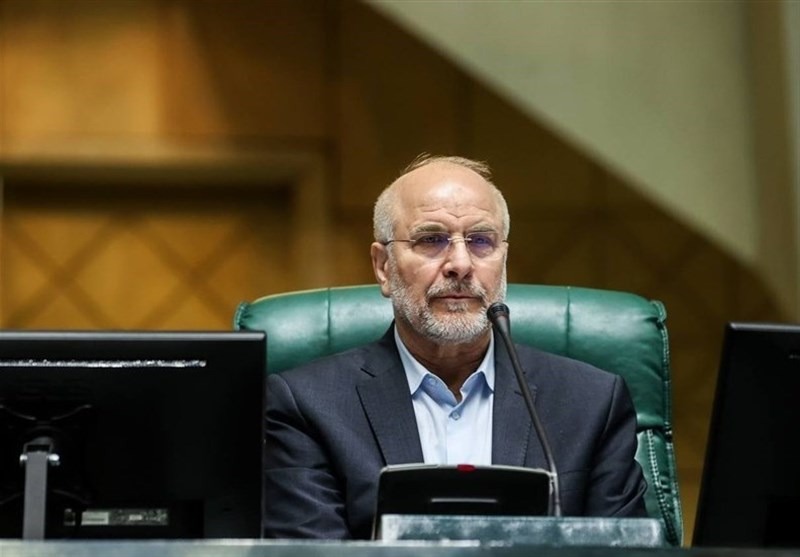
Iranian Parliament Speaker Mohammad Bagher Ghalibaf has characterized Tehran's approach towards the United States as "diplomatic strength," emphasizing that the recent discussions starkly differ from the 2015 nuclear negotiations in Vienna.
Ghalibaf, who leads Iran’s negotiations with the U.S., stated in an interview with the Islamic Republic of Iran Broadcasting late Wednesday that Iran enters these technical discussions from a position of strength, owing to recent military achievements.
"No Room for Empty Slogans"
He added that "there is no place in the current talks for empty slogans, concessions, or settlements," describing the negotiating process as "a form of resistance." He claimed that "Iran's military gains have been acknowledged by allies and adversaries alike."
Furthermore, Ghalibaf declared the memorandum of understanding as "a record of U.S. failure."
He mentioned the Strait of Hormuz as part of the agreements reached with the U.S., stating that transit service fees have been finalized under the memorandum. "The payment of transit service fees through the Strait of Hormuz has been legalized under the memorandum," he said.
He frequently emphasized that Lebanon was a key topic within the negotiations, stating, "We informed the mediator that Lebanon and the frozen funds were major points in the talks." He indicated that discussions on Lebanon influenced the pace and direction of the negotiations, particularly after Israel's attack on Beirut's southern suburb.
It should be noted that the 2015 Vienna accord between Iran and the permanent members of the U.N. Security Council, Germany, and the EU aimed to prevent Tehran from developing nuclear weapon capabilities.
At that time, Iran's former Supreme Leader Ali Khamenei endorsed what he called "heroic flexibility" in the negotiations, while hardliners criticized the deal as a concession.
However, the U.S. later withdrew from the agreement in 2018 during President Donald Trump’s first term, reinstating sanctions on Tehran and exacerbating its economic crisis.
The current memorandum of understanding, outlined by a senior U.S. official to reporters on Wednesday, stipulates that the U.S. will immediately halt sanctions on Iranian oil sales upon signing.
Washington also commits to removing all sanctions on Tehran upon reaching a final agreement at the conclusion of a 60-day negotiation period.
According to the agreement, Iran must permit the full resumption of maritime navigation in the strategically vital Strait of Hormuz within 30 days, as its ongoing closure has harmed the global economy.
The document also outlined the reduction of high-enriched uranium stockpiles, stating "the minimum mechanism is to lower enrichment levels under the supervision of the International Atomic Energy Agency."
The U.S. official described this Iranian commitment as a "major victory" for Washington.
Furthermore, the U.S. pledges, in the event of a final agreement, to collaborate with "regional partners" to devise a jointly agreed final plan worth no less than $300 billion for Iran’s economic reconstruction and development.
The two nations are expected to discuss the mechanism for managing Iran’s enriched uranium stockpile over the next two months.