


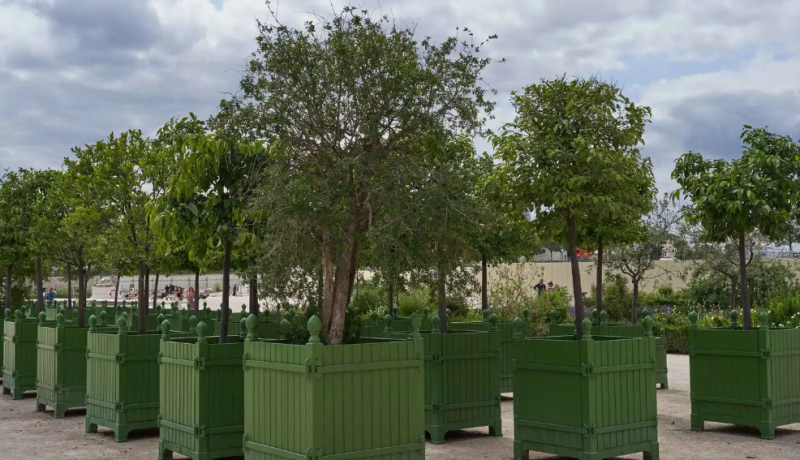
As European cities face increasing heatwaves, the search intensifies for practical solutions to make urban life more bearable. With frequent temperature spikes, redesigning cities has become a crucial option to combat the impacts of climate change, rather than just a future idea.
The Huffington Post cited architect and urban illustrator Benjamin Marquet, who presented visual insights into future French cities more equipped to handle extreme heat. His illustrations show how simple modifications can significantly lower city temperatures.
Marquet emphasizes that certain urban interventions can reduce street temperatures by a few degrees Celsius, with tree planting at the forefront. He notes that even a single row of trees can decrease temperatures by about 5 degrees during heatwaves.
He highlights the importance of transforming public spaces, such as schoolyards, into green areas, and creating "green corridors" within cities for pedestrians and cyclists instead of cars, reducing the heat absorption of asphalt surfaces.
In Paris, for example, studies from the Paris Urban Planning Institute (APUR) suggest the potential for planting approximately 20,000 trees along roadsides, which could significantly alter the city's local climate.
Marquet argues that rethinking transportation infrastructure is key. Excessive reliance on cars increases paved areas that retain heat, while alternative transport methods allow for more green spaces.
He suggests relocating parking facilities from city centers to the outskirts, converting these spaces to parks and greenery, and improving building insulation to reduce indoor heat effects.
These solutions are not easy to implement in dense cities like Paris, but they are possible gradually with ongoing urban development, especially in new city constructions.
The biggest challenge lies in changing city planning perceptions to make green spaces an essential part of urban planning, not just aesthetic elements, but effective tools to face a hotter future.