


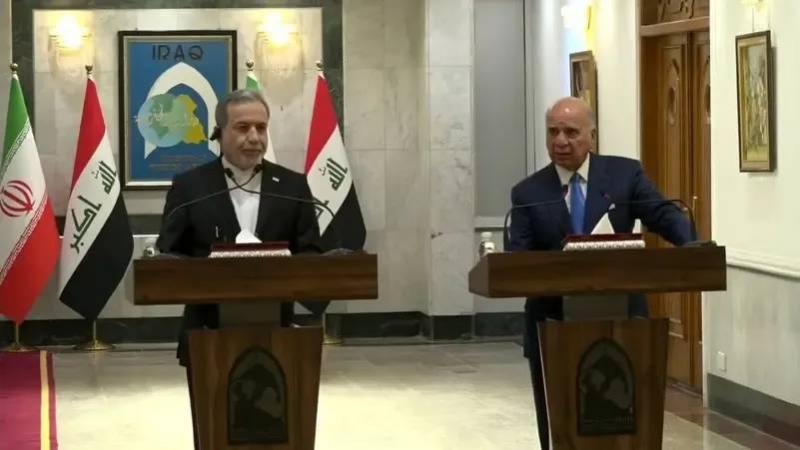
Amid escalating tensions between Iran and the United States following recent exchanges of strikes, Iranian Foreign Minister Abbas Araghchi arrived in Baghdad today, Sunday, on an official visit to Iraq.
Araghchi met with Iraqi Foreign Minister Fuad Hussein, who emphasized during a joint press conference that the visit was crucial for discussing the memorandum of understanding between the U.S. and Iran. Hussein noted that his Iranian counterpart had briefed him on the understandings with Washington.
Warning Against Continued Conflict
Hussein also highlighted the importance of the Baghdad-Tehran relationship and expressed regret over Iran's ongoing conflict. He explained that the closure of the Strait of Hormuz had halted the flow of Iraqi oil, calling for its unrestricted reopening.
He warned that the persistence of war would devastate the region.
In return, the Iranian delegate thanked Iraq for its cooperation and support, affirming continued collaboration with Baghdad in all economic, political, security, and cultural areas.
Araghchi mentioned that Iran would continue cooperation with the new government led by Ali Zaidy and emphasized Iran’s commitment to maintaining strategic ties with Iraq.
He also stated that "things will return to their previous state at Hormuz once obstacles are removed," as he put it.
Heightening Tension
This visit occurred amid heightened regional tensions, with strikes exchanged again on Saturday and Sunday between the U.S. and Iran. The U.S. military launched raids early today on southern Iran following an attack on a ship in the Strait of Hormuz.
In response, the Revolutionary Guard reportedly targeted American bases in Kuwait and Bahrain, threatening to halt negotiations and retaliate more aggressively against new escalations.
Meanwhile, U.S. President Donald Trump threatened to eliminate Iran if the U.S. was forced to resume hostilities, accusing Tehran of violating a ceasefire agreement.
It is worth noting that the U.S.-Iran memorandum of understanding signed on June 18, comprising 14 clauses, called for a cessation of hostilities and the formation of working groups to address several issues, including the Strait of Hormuz, lifting sanctions on Iran, and releasing Iran's frozen assets abroad.
These technical committees were expected to meet in the coming days in Qatar and Islamabad.