


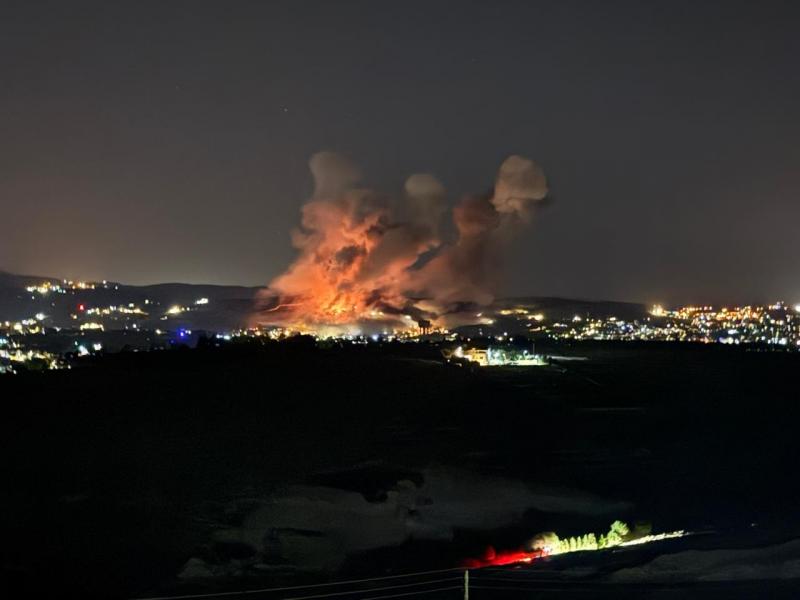
On June 26, 2026, the Israeli army seized control of Ali Al-Taher Heights, a key strategic point in southern Lebanon. This move has sparked questions regarding its geographical significance and the strategic advantages it offers, thereby impacting Hezbollah, which has relied on this "hill" as a crucial supply artery.
Military sources close to the Lebanese army argue that control over these heights provides commanding fire control over the road stretching from southern Litani towards western Bekaa, passing through Kfar Kila Bridge and reaching the valley leading to the western Bekaa.
The Israeli army noted that the hill, previously regarded by Hezbollah as a fortified military hideout and base, is now fully under Israeli security control.
Furthermore, it claimed that "ongoing operations establish a new security reality, definitively curtailing Hezbollah's influence in this crucial area," emphasizing that Israeli forces will not allow the hill to once again pose a threat to Israel's security.
Significance of Ali Al-Taher Heights
Situated at about 600 meters above sea level, Ali Al-Taher Heights offers stationed forces superior observation and fire direction capability.
The area of operations spans approximately 4-7 square kilometers, located 12-15 kilometers from the Israeli border, making it strategically significant in southern Lebanon.
The heights hold special importance as they oversee five critical areas in southern Lebanon, including Nabatieh, Kfar Tebnit, Litani Valley, the Beaufort Castle, and supply routes in the eastern sector, crucial for monitoring movement within the region.
The location provides a direct view of several strategic regions, allowing the monitoring of movements across surrounding roads, expanding field visibility, and observing supply lines along the eastern sector.
Therefore, Israel's success in gaining control will sever supply lines and aid in linking the western Bekaa with the south, given its role as a sensitive military node with infrastructure, tunnels, and Hezbollah elements, alongside other foreign entities.
The Role of Tunnels and Fortifications
Unofficial estimates suggest the presence of dozens of Hezbollah fighters in the area, taking advantage of a network of fortifications and tunnels established at the site, serving to bolster defensive capabilities.
This network includes command rooms, ammunition storage, sniper positions, and anti-armor missile platforms, forming an integrated field structure within the area.
The Ali Al-Taher Heights emerge as one of the elevated points in southern Lebanon, granting oversight over a broad area, thereby enhancing their importance in military operations that hinge on controlling high grounds and vantage points.
Control over these heights enables Israel to secure the north against drone and missile threats, rendering areas like the Zahrani – Nabatieh link effectively under military control, marking a significant strategic loss for Hezbollah.
Information indicates that tunnels and fortifications in the area include command facilities, ammunition storage, sniper points, and anti-armor missile platforms, with unofficial estimates citing the presence of dozens of Hezbollah fighters within this network.
Monitoring Supply Lines
The strategic importance of securing Ali Al-Taher Heights lies in providing superior intelligence and firepower capabilities, enabling the detection of Hezbollah fighter movement around Nabatieh and tracking supply lines linked to the area.
The site combines geographical elevation and the oversight of several critical roads, alongside a network of tunnels and fortifications, underscoring Ali Al-Taher Heights' significance in the southern Lebanon military landscape.
Political experts believe that the importance of "Ali Al-Taher Heights" stems from its role as an advanced logistical base within Hezbollah's network, in addition to its function in connecting supply lines between the western Bekaa and the south.
Hence, controlling these heights would deal a significant blow to Hezbollah's military and logistical structure and limit its ability to transport equipment and fighters while providing launch platforms towards sensitive areas in Israel, particularly the Galilee Finger, according to observers.
Observers add that Israel will maintain its forces at the strategic points it has seized within the border strip, continuing to carry out localized military operations and persistent breaches including directed artillery fire and intensive drone patrols, citing the protection of northern towns and preventing Hezbollah elements from approaching the borders.