


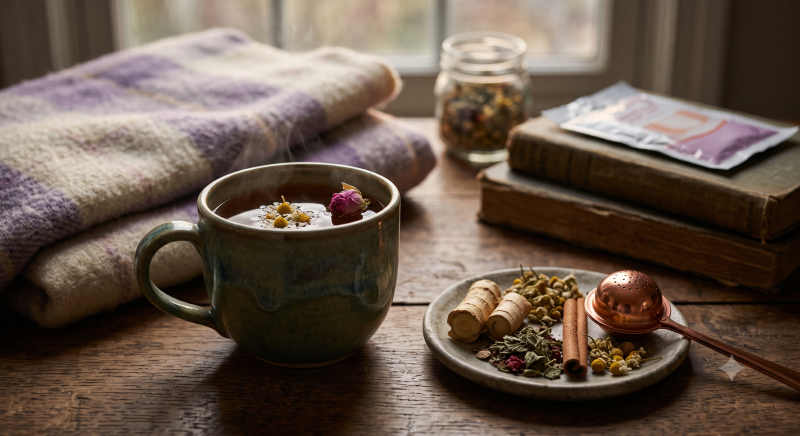
Menstrual pain is one of the most common symptoms faced by women of different ages, varying in severity from person to person. These pains often result from cramps in the uterine muscles, leading to discomfort in the lower abdomen and back. Additional symptoms may include headaches and general fatigue.
Although many medical pain relievers exist, many women turn to natural solutions for gradual and relatively safe pain relief. Among the most notable remedies are warm drinks, which help relax muscles, improve blood flow, and reduce cramps.
How Do Drinks Help Relieve Menstrual Pain?
Certain natural beverages calm the smooth muscles of the uterus, reducing cramp intensity. Warm drinks can improve blood circulation, reduce bloating, and soothe the nervous system, directly alleviating pain.

Best Drinks to Soothe Menstrual Pain
Chamomile Tea
Chamomile tea is popular during menstruation, believed to relax muscles and reduce cramps. It also enhances sleep quality and alleviates pain-related tension.
Ginger Tea
Ginger is known for its warming properties that enhance blood flow and reduce inflammation. Ginger tea may also relieve nausea sometimes accompanying menstruation, as well as lessen cramp intensity.
Warm Mint
Mint helps relax digestive and uterine muscles, potentially reducing bloating and pressure in the abdomen. Its soothing effect also contributes to overall tension reduction.
Cinnamon
Cinnamon is traditionally used to alleviate menstrual pain, believed to regulate blood flow and reduce cramps. It can be consumed as a warm drink or added to other beverages.
Fenugreek
Fenugreek contains plant compounds that may ease pain and enhance general comfort during menstruation, often used in some cultures as a traditional drink for this period.
Warm Water
Though simple, warm water is essential during menstruation. It helps reduce cramps, improve circulation, and hydrate the body, significantly alleviating pain.
Additional Tips to Ease Menstrual Pain
It's advisable to drink sufficient fluids and avoid caffeine-rich beverages, which can increase tension and cramps in some women. Maintaining rest and light activity can also improve overall condition.
When to Consult a Doctor?
If menstrual pain is unusually severe or significantly affects daily life, it may be necessary to consult a doctor to rule out other health issues like ovarian cysts or endometriosis.
See also:
Ways to Improve Fertility
Is Dizziness Linked to Menstruation?
Causes of Sudden Menstruation Cessation