


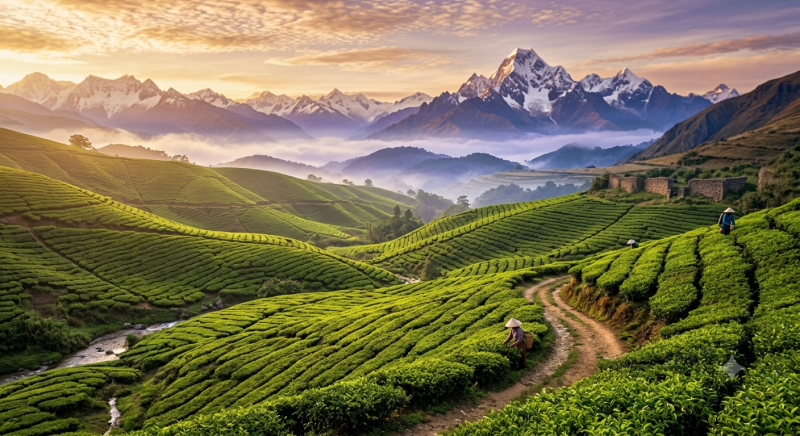
Tea is among the most significant agricultural crops globally, consumed daily by billions of people in its various forms, such as black, green, white, and oolong tea.
Tea plants thrive in humid and temperate climates, requiring ample rainfall and suitable temperatures to ensure high-quality leaves and production.
Several countries, particularly in Asia and Africa, dominate global tea production, benefiting from vast agricultural lands and decades of expertise in cultivating this crucial crop.
Top Tea-Producing Nations Worldwide

1. China
China is the world's leading tea producer, famous for a wide array of teas, including green, black, white, oolong, and pu-erh. The country boasts a tea cultivation history spanning thousands of years and is a major global tea exporter.
2. India
India ranks second globally, known for producing high-quality black teas, notably from regions like Darjeeling, Assam, and Nilgiri. A significant portion of the production is consumed domestically, while the rest is exported worldwide.
3. Kenya
Kenya is Africa's largest tea producer and one of the world's biggest exporters. Kenyan tea is notable for its strong color and rich flavor, widely used in international tea blends.
4. Turkey
Turkey is renowned for its black tea production, particularly in the Black Sea region. Tea plays a vital role in Turkish culture and meets substantial domestic demand.
5. Sri Lanka
Globally known as "Ceylon" for its tea industry, Sri Lanka produces high-quality varieties popular in international markets, with aromatic flavor and exceptional quality.
6. Vietnam
Vietnam has seen significant growth in tea production over recent decades, producing green and black tea varieties for export.
7. Indonesia
Indonesia is a traditional tea producer, known for its plantations situated in mountainous regions with temperate climates.
8. Myanmar
Myanmar is gradually increasing its tea production, with part of it consumed domestically, and the remainder exported to regional markets.
9. Japan
Japan is celebrated for its high-quality green teas, like "Sencha" and "Matcha" teas, employing advanced agricultural techniques to ensure quality.
10. Iran
Iran is a prominent tea producer in the Middle East, with cultivation concentrated in northern areas adjacent to the Caspian Sea.
Why These Nations Lead in Tea Production

These countries excel due to various factors, including:
- Humid and temperate climates
- Abundant rainfall
- Fertile soil
- Extensive agricultural lands
- Long-standing tea cultivation expertise
- Advances in agricultural and processing techniques
Globally Popular Tea Varieties
The most widespread tea types include:
- Black tea
- Green tea
- White tea
- Oolong tea
- Pu-erh tea
- Matcha tea
Is Global Tea Demand Rising?
Yes, global tea demand continues to grow, driven by population increases, interest in natural beverages, and the health benefits of certain teas, particularly green tea. Emerging markets and e-commerce further bolster the worldwide distribution of tea products.
See Also: