


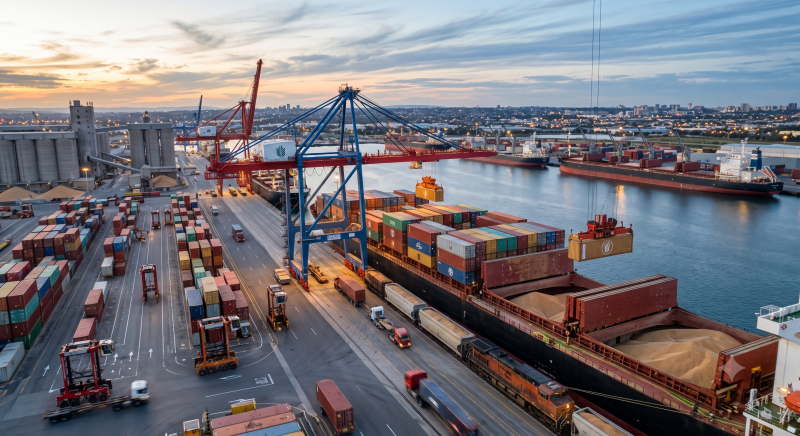
Food exports are a key indicator of the strength of a country's agricultural sector and food industries. They reflect not only production levels but also the efficiency of supply chains, manufacturing quality, and competitiveness in global markets.
Food exports encompass a variety of products including grains, meats, vegetable oils, dairy products, fruits, vegetables, beverages, and processed foods.
Despite annual changes due to production, pricing, and climatic conditions, a few countries consistently lead thanks to continuous investment in agriculture, cutting-edge technology, and infrastructure development.
This ranking is based on international trade data from organizations such as the Food and Agriculture Organization (FAO) of the United Nations and the World Trade Organization (WTO), as well as global trade databases.
List of the World’s Top Food Exporting Countries:

United States
The United States tops the list of leading food-exporting countries, owing to one of the largest agricultural sectors vibrant food industry, and highly efficient transport networks and ports. Its diverse climate and extensive farmlands allow for vast production of crops and animal products.
Key exports include corn, soybeans, wheat, beef, poultry, and dairy products, along with processed foods. The U.S. is a primary source of food for many countries, especially in Asia, Latin America, and the Middle East. Persistent investment in agricultural technology and research ensures high productivity even amid climate change.
Brazil
In recent decades, Brazil has emerged as a global agricultural powerhouse due to its expansion of agricultural land and adoption of modern technology, becoming a major food supplier to international markets.
Brazil is renowned for exporting soybeans, sugar, coffee, corn, and poultry, which form a substantial part of global food trade.
China, the European Union, and several Arab countries are significant importers of Brazilian agricultural products, benefiting from Brazil's diverse climate and massive output to compete in various markets.
Netherlands
Despite its small size, the Netherlands exemplifies global smart agriculture, becoming a leading food exporter by using advanced technology within greenhouses and modern irrigation systems for highly efficient farming.
The Netherlands exports vegetables, fruits, dairy products, potatoes, and agricultural seeds, and it plays a significant role in re-exporting food products through Rotterdam, one of Europe's largest ports. Its success is innovation-driven rather than reliant solely on expansive agricultural areas.
Germany
Germany boasts a highly advanced food sector known for its quality and industrial technology, ranking among Europe's and the world's largest exporters of processed foods.
Its exports include dairy products, meat, baked goods, confections, and beverages, along with numerous processed foods reaching European and global markets. Germany's central European location facilitates trade and product distribution.
France
France is a key agricultural powerhouse in Europe, with its diverse, high-quality food sector granting French products a distinctive position in global markets.
It exports wheat, dairy, cheese, butter, various agricultural goods, and numerous processed foods. European agricultural policies bolster French production and enhance its competitiveness abroad.
China
China's massive agricultural and industrial sectors make it a major player in global food trade. While it imports significant quantities of some crops to meet domestic demand, it also exports a wide range of food products.
Exports include vegetables, fruits, tea, seafood, and processed foods, capitalizing on its vast manufacturing capabilities and extensive trade networks across continents.
Canada
Canada ranks among the top grain exporters, thanks to its vast agricultural lands and high production levels, with a strong reputation for agricultural product quality.
Canadian exports include wheat, canola, barley, legumes, and meats, reaching Asia, Europe, and the Middle East. Its agricultural sector relies on modern technology and scientific research to boost production and quality.
Spain
Spain's agricultural diversity, aided by its Mediterranean climate, positions it as a leading supplier of fruits and vegetables to European markets.
Spain is renowned for exporting olive oil, citrus fruits, tomatoes, grapes, and fresh vegetables, alongside seafood. It maintains a global standing in olive oil production and is one of its largest producers and exporters.
Italy
Italy's food export strength lies in value-added products, with Italian foods highly sought after worldwide due to their quality and association with renowned Italian cuisine.
Italy exports pasta, olive oil, cheese, processed tomatoes, confections, and various food products, ranking highly among Europe's luxury food exporters.
Argentina
Argentina is one of South America's leading agricultural producers, with the agricultural sector a crucial pillar of its economy.
Its exports include soybeans, corn, wheat, beef, and soybean oil, significantly contributing to meeting global demand for grains and animal proteins, particularly in Asian markets.
What Propels These Countries to Lead in Food Exports?
Success in food exporting is not solely based on having an abundance of farmland; it involves several factors. Key elements include investment in agricultural technology, developing seed varieties, improving irrigation systems, and having advanced infrastructure for transportation and storage, coupled with food industries capable of producing high-quality goods that meet international standards.
Trade agreements and opening foreign markets also enhance these countries' competitiveness, alongside their investment in scientific research and agricultural innovation.
See Also: