


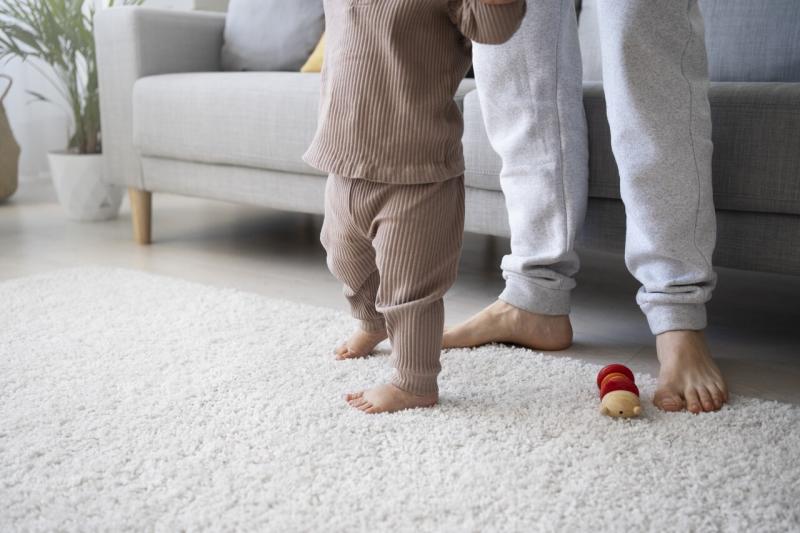
Most children begin walking independently between 12 and 15 months of age, though some may start as early as 9 or 10 months. Others might take until 18 months to start walking and still fall within the normal developmental range.
Each child is unique, and their pace of developing motor skills should not be compared with others. Factors like genetics, muscle strength, weight, and daily activity opportunities influence each child's development rate.
How Do Children Learn to Walk?
Children don't start walking overnight. Instead, they acquire the skill gradually through a series of developmental stages that strengthen muscles and improve balance and coordination.
Pre-Walking Motor Development Stages
Ages 4 to 6 months: Rolling Over
During this stage, children begin to roll over from their stomachs to their backs and vice versa. This skill is crucial for building neck, back, and trunk muscles, forming a foundation for future movement.
Ages 6 to 8 months: Sitting Without Support
Most children can sit independently at this age, which aids in balance improvement and strengthens back and abdominal muscles. Furthermore, they start using their hands freely to explore their surroundings.
Ages 8 to 10 months: Standing and Bearing Weight
Children attempt to stand by holding onto furniture or people in this stage and start bearing their body weight on their legs, which is an essential step before walking.
Ages 9 to 12 months: Cruising
Children begin to move while holding onto furniture or walls, a practice known as cruising. It's a clear sign that independent walking is nearing, as some may attempt to stand alone briefly before taking their first steps.
Signs That Indicate a Child Is About to Walk
You can observe several signs signaling that walking is close, such as:
-Standing unassisted for several seconds.
-Crusading along furniture.
-Attempting to push walking toys.
-Frequent standing and sitting without support.
-Trying to take one or two steps independently.
-Increased confidence in movement and exploration.
How to Encourage Your Child to Walk
Parents can support their child in developing motor skills through some simple strategies.
Encourage Barefoot Walking Indoors
Walking barefoot stimulates the nerves in the feet and enhances ground sensation, improving balance and strengthening muscles.
Provide a Safe Space for Movement
Ensure your child has daily floor playtime in a safe area, as free movement naturally aids muscle and balance development.
Use Toys to Motivate
Place your child's favorite toy a short distance away to encourage them to stand and take simple steps towards it. Words of encouragement and applause can boost their confidence and motivation to try.
Avoid Using Baby Walkers
The American Academy of Pediatrics warns against using baby walkers as they can delay natural walking skills and increase the risk of falls and household injuries. Opt for natural movement and safe play instead.
Is Early Walking Better?
Not necessarily. Starting to walk at an early age does not guarantee that a child will be more intelligent or develop faster than others. Conversely, slight delays in walking are not indicative of problems, as long as the child is achieving other developmental milestones adequately.

When to Consult a Doctor
Consult a pediatrician if you encounter any of the following signs:
-Not walking independently after 18 months.
-Persistent walking on tiptoes.
-Dragging one foot or noticeable limping.
-Loss of a previously acquired motor skill.
-Inability to stand with evident delays in motor development.
-Marked stiffness or noticeable muscle floppiness.
Additionally, the doctor might recommend a developmental evaluation or tests if there is a suspicion of a neurological or muscular issue.
Potential Causes for Walking Delays
In most cases, delays are minor and normal, but sometimes they might be linked to causes such as:
-Premature birth.
-Muscle weakness.
-Deficiency in certain vitamins, such as Vitamin D.
-Neuromuscular disorders.
-Some genetic or developmental disorders.
Early diagnosis aids in providing appropriate intervention when necessary.
In conclusion, the typical age for children to begin walking is generally between 12 and 15 months. Some children might not start until 18 months without it being cause for concern.
If walking is significantly delayed or unusual signs appear, consulting a pediatrician ensures reassurance about your child's growth and access to necessary intervention.
See Also
Signs of Calcium Deficiency Not to Ignore