


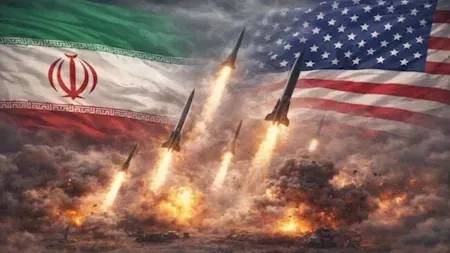
For weeks, Israel has been engulfed in a state of uncertainty amid the continuous fluctuations surrounding the intermittent confrontation with Iran. As Washington and Tehran toggle between negotiations, threats, and military strikes, Israel finds itself in a state of open-ended anticipation, unclear whether the next phase will lead to a political settlement or a new round of warfare.
According to The New York Times, Israeli civilians are apprehensive about traveling this summer, fearing airspace closures or flight disruptions that could leave them stranded abroad. There's also rising anxiety about the possibility of returning to bomb shelters should Iranian attacks resume.
Simultaneously, the Israeli military is struggling to pinpoint a scenario to prepare for, having concluded its military campaign against Iran with a tenuous ceasefire that's fragile and limited, while still being involved in military operations on the Lebanese and Gaza fronts.
This ambiguity places Israel in a discomforting position. Polls indicate that Israelis today feel their security has decreased compared to the period before the US-Israel assault on Iran last February. Nevertheless, many believe that the continued state of anticipation is less risky than the alternatives, be it an agreement that doesn't meet Israeli concerns or an all-out military confrontation.
The principal dilemma lies in the differing objectives between Israel and US President Donald Trump's administration. Trump has made clear that his immediate goal is to reopen the Strait of Hormuz for international navigation and commerce, and to prevent Iran from disrupting ship passage.
Despite his harsh rhetoric against Tehran, Trump has repeatedly asserted that US military operations are not intended to ignite a new war but to pressure Iran back into negotiations.
In Israel, however, any potential agreement between Washington and Tehran is viewed as an additional source of concern, especially after the memorandum of understanding reached by the two parties in June, which Israeli officials argue ignored key security issues.
The Israeli assessment suggests the memorandum did not address Iran's ballistic missile arsenal, nor impose clear constraints on Tehran's support for allied militant groups in the region, both seen by Israel as direct security threats.
The understandings also considered releasing billions of dollars to Iran, amid Israeli fears that Tehran might use these funds to enhance its missile capabilities or finance its regional allies. Additionally, the memorandum postponed discussions on mechanisms to prevent Iran from acquiring nuclear weapons, intensifying Israeli skepticism about any subsequent agreement.
As a result, many Israeli officials and experts do not hold much hope for the new negotiations yielding a better deal. Yaakov Nagel, a former national security advisor to Prime Minister Benjamin Netanyahu, stated that not engaging in negotiations could be more favorable than reaching a bad agreement.
Shira Efron, an Israeli analyst at the Rand Corporation, opined that Israel would eventually bear the consequences of any discrepancies in the deal, suggesting that a potential settlement might constrain Israel's ability to conduct unilateral military operations against Iran.
She explained that Tehran poses a direct threat to Israel in a way that differs from the nature of the threat it poses to the US. Therefore, Tel Aviv fears that Washington might prioritize its interests without considering all Israeli security concerns.
Against the concerns over an agreement, some Israeli military and government officials see a return to an all-out military confrontation as a more acceptable option than co-existing with an understanding that grants Iran additional resources without addressing its missile capabilities and network of regional allies.
Nonetheless, Netanyahu largely remains absent from the public political discourse on resuming conflict. Analysts suggest that this silence reflects an understanding that Israel cannot appear to be pushing for a new confrontation in the international community, particularly with the prevalent belief that Netanyahu played a significant role in pressuring Trump into military engagement from the start.
Thus, the current waiting situation for Israel seems to be the lesser of two evils, as the ongoing tension and uncertainty, despite their psychological and military costs, remain less dangerous than a wide-scale regional war.
Still, the possibility of escalation persists, as the state of tension could shift to a broader confrontation should Iran miscalculate and attack Israel, or target a US warship in response to Washington's embargo on Iran's maritime routes.