


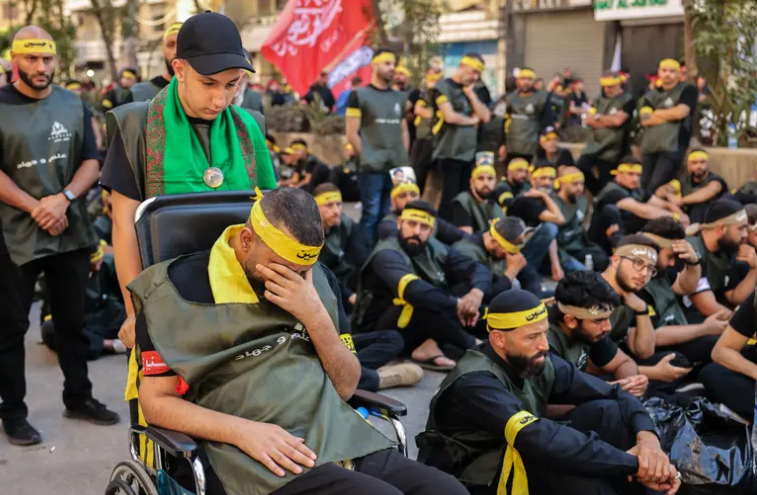
In the context of ongoing negotiations with Israel mediated by the US, a Lebanese ministerial source disclosed that various local and international advisories have been issued to Hezbollah. The advice, either direct or indirect, urges Hezbollah not to support Iran if military confrontations resume heavily between Iran and the US. This caution stems from potential retaliatory actions by Israeli Prime Minister Benjamin Netanyahu, who is gearing up for parliamentary elections scheduled for October 27 amidst concerns he might launch destructive strikes outside southern Lebanon.
The ministerial source questioned Hezbollah's willingness to heed these advisories, given past instances where its Secretary-General Naim Qassem reneged on a commitment to Speaker Nabih Berri not to back Iran. Initially, Hezbollah denied responsibility for launching rockets, distancing itself from the actions. But later, Hezbollah claimed responsibility citing retaliation for Iranian leader Ali Khamenei's assassination, which, as per a source to ‘Asharq Al-Awsat’, prevented US intervention to deter Netanyahu's response.
Emphasis on Berri's Role
The source emphasized that Netanyahu is unlikely to ignore repeated Hezbollah endorsements of Iran, which could provoke unprecedented aggressive strikes on areas beyond the south. It stressed that Netanyahu holds leverage in the south to counter his rivals, and abstaining from a response could bolster support for them in the elections.
Hope remains pinned on Speaker of the House Nabih Berri to potentially persuade Hezbollah's leadership to steer clear of supporting Iran, thus restraining Hezbollah's actions. However, if Berri's diplomatic efforts fall short, it would imply that the decision-making is centered in Tehran, not Beirut.
Confidence in Berri’s role is shared by President Joseph Aoun, who counts on it unless Hezbollah disregards his advice. Hezbollah would struggle with the repercussions of potential new displacement waves, reverting Lebanon to an earlier state after the return of hundreds of thousands to the south and southern suburbs post reaching a 'framework agreement' between Lebanon and Israel under American auspices.
President Aoun prioritizes fortifying domestic fronts, enhancing military presence in strategic regions, and awaits promised US support for military needs. This aligns with President Donald Trump's assurances in Washington to dispatch a military delegation to assess army requirements. Strengthening internal unity topped discussions between Aoun and Berri, transcending prior tensions, to tackle current political and security conditions.
Military Meeting in Rome
The source anticipates the 'Rome-2' meeting on August 4 will focus on military aspects unless a need arises to include political figures from the three countries involved in the 'framework agreement.' The notion of expanding experimental zones was earlier raised by Aoun in talks with Trump, and may re-emerge at 'Rome-2', potentially covering major southern towns, including the Shiite-majority city of Khiam, which also has Christian residents. Israel previously rejected this idea, and Hezbollah showed minimal enthusiasm, despite Khiam being surrounded by towns with Christian, Druze, and Sunni populations. Agreeing to include Khiam in experimental zones implicates relinquishing strategic high grounds, a proposal Hezbollah repeatedly resisted.
The source claims Netanyahu remains unwilling to expand experimental zones and will defer this issue post-elections, even as it's tabled for 'Rome-2'. Also included is a Lebanese army's warning against Israeli obstructions in implementing the 'framework agreement,' emphasizing the necessity of ceasing hostilities and Israeli incursions in allocated army positions in reclaimed towns.
Despite US willingness to mediate, Hezbollah refused to vacate strategic areas necessary for army deployment, areas under Israeli fire control, as evidenced by strikes on Hezbollah members departing tunnels under these hills.
Facilitating army access to these high grounds could open negotiations for Israeli withdrawal from villages around Western Zawtar, reducing fire control over Upper Nabatieh up to Nabatieh itself. Israeli withdrawal could later accommodate incorporating Khiam in trial zones, contingent on reopening the Khardali bridge linking Nabatieh to towns in Marjayoun and Hasbaya Districts.
Pressure to Expand Experimental Zones
Lebanon continues advocating for enlarging experimental zones by reintegrating occupied towns, but Israeli reluctance blocks this, at least until post-elections unless US intervention convinces Netanyahu otherwise. President Aoun stresses enhancing internal conditions for maintaining public peace in alignment with Berri, aiming to navigate election dynamics with minimal setbacks. It hinges on Hezbollah's receptiveness to advices against supporting Iran, avoiding giving Netanyahu uncharged pretexts for significant retaliatory actions beyond southern regions.