


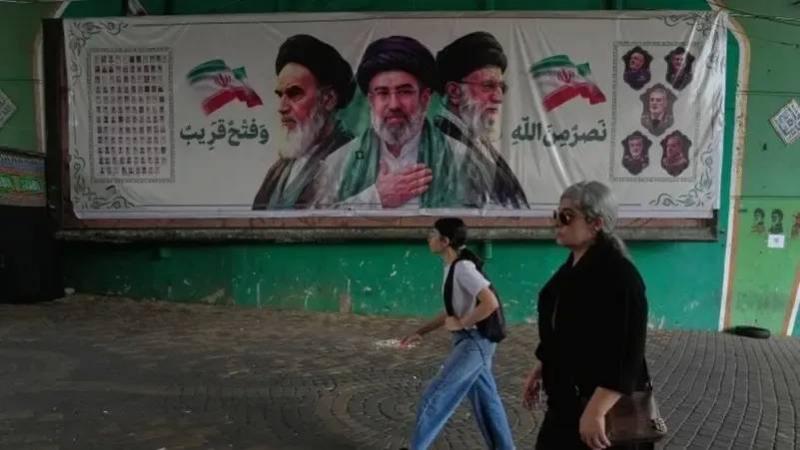
Iran's leaders believe victory is within reach, banking on time and potential fatigue from U.S. President Donald Trump, analysts suggest.
They are wagering that military pressure will eventually force the United States to accept their control over the Strait of Hormuz, a crucial global energy channel. As reported by the Associated Press on Monday, they see time as their ally.
Iran understands that diminishing U.S. stockpiles of key weaponry, like advanced intercept missiles, add pressure on Trump's administration.
They know war is unpopular among most Americans. Plus, with the strait largely closed, fuel and other goods' prices remain high as the U.S. midterm elections approach in November.
Iranian leaders realize that forcibly opening Hormuz would be costly and might require deploying U.S. ground forces. They also know that their allies, the Houthi militias in Yemen, can expand the war scope, disrupting another global trade route. From this standpoint, they perceive Trump has little option but to yield.
Trump's Threats and Pressure
Still, Iran's strategy carries risks. Trump alternates between threatening escalation and claiming negotiations are progressing.
He has frequently mentioned the severe impacts on Iran's economy, partly due to U.S. sanctions, and has hinted at further economic pressure.
Given these, Iranian leaders only need to recall how Trump's 'short' Middle Eastern stint turned into a complex quagmire, reminding them that wars rarely end as planned.
Despite all, Tehran believes time favors them. Borrowing from Trump's geopolitical theories, Iran thinks it has 'trump cards.'
Iran has repeatedly asserted that the Strait of Hormuz will no longer be an open waterway and has continued targeting unauthorized ships attempting passage. Iran's joint military leadership described it as a 'red line.'
Major Obstacle
Mustafa Najafi, a Tehran-based security analyst, highlighted that the strait has become a strategic tool for Iran, serving as deterrence and maintaining regional power balances, hence complicating efforts to end the war and settle the enduring nuclear dispute.
Iranian analyst Rahman Gahremanpour noted that the nuclear issue has been relegated due to the Hormuz conflict, to Iran's favor.
Risky Gamble and Economic Pressures
He added that controlling the strait offers Tehran a negotiation chip if nuclear talks resume, but it remains a risky gamble.
The war's economic fallout has spread worldwide, yet is felt heavily inside Iran. U.S. and Israeli strikes have decimated parts of Iran's industrial base, while U.S. sanctions have strangled much of its oil exports.
Iranians are facing soaring food prices.
Adding to this, Trump has repeatedly threatened broad strikes on civilian infrastructure, like water and electricity grids.
This has sparked concern among Iranians, including those close to moderate President Massoud Beshkekian, fearing the country may push too far in confrontation bearing high economic and living costs, possibly inciting protests.
Former Foreign Minister Mohammad Javad Zarif, a key figure in the 2015 nuclear deal negotiations, penned a recent article stating Iran's wartime achievements have opened a 'unique diplomatic window.'
However, he warned, without a timely agreement: 'Economic recovery will be challenging, and internal disruption or renewed aggression cannot be ruled out, especially post-U.S. elections.'
Gahremanpour noted Tehran uses the strait to 'show it hasn't been defeated... this might boost domestic legitimacy.'
However, this strategy could backfire. Resilience has limits, with concerns an economic collapse could trigger new unrest.
He added: 'Iran cannot maintain this strategy indefinitely; at some point, it will have to reach an agreement with the U.S.'
Still, analyst Davari saw Iran enduring current pressures, saying: 'Unlikely to retreat from its stance despite economic hardship.'
Potential Agreement
Iranian officials have reiterated the prospect of an agreement with Oman for managing the Strait of Hormuz, which separates the two nations, is near. However, Tehran announced last Saturday that the strait will remain closed until 'the U.S. amends its behavior,' requiring a permanent end to the war, lifting the naval blockade on Iranian ports, and withdrawing U.S. troops from the region.
Additionally, they demand the U.S. 'fully compensate Iran' for war damages, lift sanctions, and 'unconditionally' release frozen Iranian assets.
The U.S. president previously made clear he would not accept Iranian control over Hormuz or any fees on this globally vital passage.