


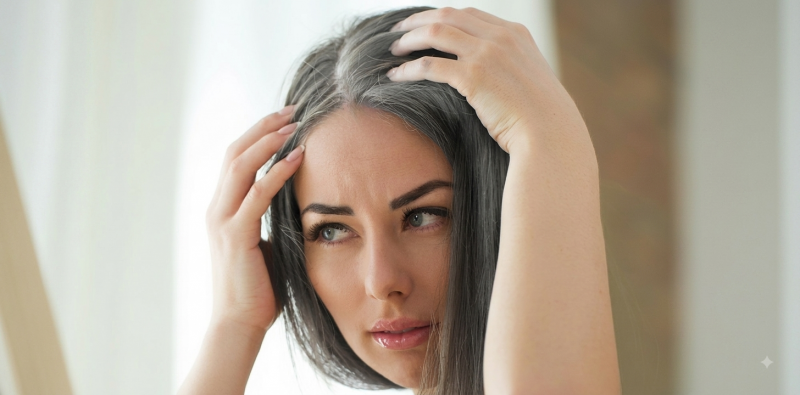
The reasons for premature graying among women vary from case to case. However, genetic factors are among the most prominent in determining the age at which hair begins to lose its natural color. Graying occurs when hair follicles lose their ability to produce melanin, the pigment responsible for natural hair color, causing hair strands to gradually turn gray and then white.
Alternatively, premature graying can sometimes be linked to other factors that can be addressed, such as nutritional deficiencies, thyroid disorders, or smoking. Thus, sudden or increasing appearance of white hair may prompt an investigation into the cause, especially if accompanied by other symptoms.
Main Causes of Premature Graying in Women
Before seeking a treatment for premature graying, it's important to identify the underlying factors, as genetic graying requires a different approach compared to graying resulting from nutritional deficiencies or health issues.
1. Genetic Factors
Genetics play a crucial role in determining when graying begins. If early graying is common among family members, a woman may be more predisposed to it at a similar age.
This doesn't necessarily indicate a health issue, as some individuals may start losing hair pigment early due to genetic predisposition. Thus, knowing family history can assist in understanding the appearance of white hair without other clear factors.
2. Vitamin B12 Deficiency
A deficiency in vitamin B12 can be linked to some cases of premature graying, especially when the deficiency is pronounced or persistent. This vitamin plays vital roles in blood formation and nervous system functions, affecting overall hair health if lacking.
If there are other symptoms like fatigue, weakness, pale skin, or tingling, a doctor may test B12 levels alongside other tests to determine if a deficiency needs treatment.
3. Iron and Ferritin Deficiency
Iron is essential for many bodily functions, and its deficiency can affect hair health and growth, particularly in cases of anemia or significant iron storage reduction.
However, it's crucial not to take iron supplements solely due to graying without confirming a deficiency through medical tests and determining the appropriate dosage under professional supervision.
4. Deficiency in Other Minerals and Vitamins
In addition to vitamin B12 and iron, studies have explored the connection between early graying and other nutrients such as copper, zinc, and vitamin D, which participate in various essential body functions. However, the relationship with graying is not necessarily direct in all instances.
Therefore, random supplementation is not recommended to prevent white hair. It's preferable to undergo tests when at risk or presenting symptoms indicating potential nutritional deficiency.
5. Stress and Oxidative Stress
Chronic stress might be one of the factors accelerating graying in some individuals. Research indicates continuous stress responses can affect the stem cells responsible for regenerating pigment cells within hair follicles.
However, linking stress and graying doesn't mean a single stressful event will directly turn hair white. Rather, persistent stress could influence pigment loss processes in predisposed individuals.
6. Thyroid Disorders
Thyroid disorders, whether hypo- or hyperthyroidism, can impact hair health, growth, and appearance. Such conditions may present with additional symptoms like weight changes, fatigue, sleep disturbances, or heartbeat variations, depending on the disorder type.
If early graying coincides with symptoms suggestive of a thyroid issue, a doctor may request thyroid function tests to determine the cause and appropriate treatment.
7. Autoimmune Diseases
Certain autoimmune diseases might be associated with pigmentation changes in the skin and hair, with vitiligo being a prominent condition linked to pigment loss. Additionally, some types of alopecia can affect hair.
These conditions differ from typical genetic graying, so noticeable white patches in hair or skin color changes require medical evaluation to identify the cause.
8. Smoking
Smoking is linked to many negative health effects, including on hair. Studies indicate a correlation between smoking and early graying, potentially due to oxidative stress and the impact of chemicals in tobacco smoke.
Therefore, quitting smoking not only improves overall health but may also reduce some factors associated with hair damage and loss of health.
9. Excessive Chemical Treatments
Frequent hair dyeing or the use of strong chemical bleaching treatments can damage the hair shaft, leading to dryness and breakage. However, they are not proven causes of graying from the roots in the same way genetic factors do.
It is crucial to differentiate between true graying due to pigment loss and changes in hair appearance due to damage or chemicals.
Can Premature Graying Be Reversed?
The possibility of reversing hair color depends on the cause. If graying results from genetic factors or natural aging, no guaranteed treatment exists to permanently restore natural color.
If graying is related to treatable factors like a clear nutritional deficiency or specific health disorder, addressing the cause may help limit the problem's progression in some cases. Some hair follicles may regain pigment production if loss is linked to reversible factors.
Nonetheless, relying on supplements or natural remedies to treat graying without determining the cause is inadvisable since excessive intake of certain vitamins and minerals can lead to health issues.
When to Consult a Doctor?
It is advisable to consult a dermatologist or specialist if graying appears suddenly or spreads unusually fast or accompanies hair loss, skin changes, persistent fatigue, weight shifts, or other new symptoms.
Depending on the individual's health history and condition, a doctor may recommend tests like blood counts, iron and B12 levels, and thyroid function assessments, along with other necessary examinations.
In conclusion, while several factors contribute to premature graying in women, genetic predisposition is most common, though other factors such as nutrient deficiencies, stress, smoking, thyroid disorders, and autoimmune conditions may contribute in some cases.
White hair appearing early doesn't necessarily signal illness, and treatment depends on the cause rather than hair color alone. Hence, the best step upon noticing unusual increases in graying is to evaluate the situation and search for treatable causes, rather than relying on unsupported supplements or remedies.
See Also
Best Methods for Treating Dry and Damaged Hair