


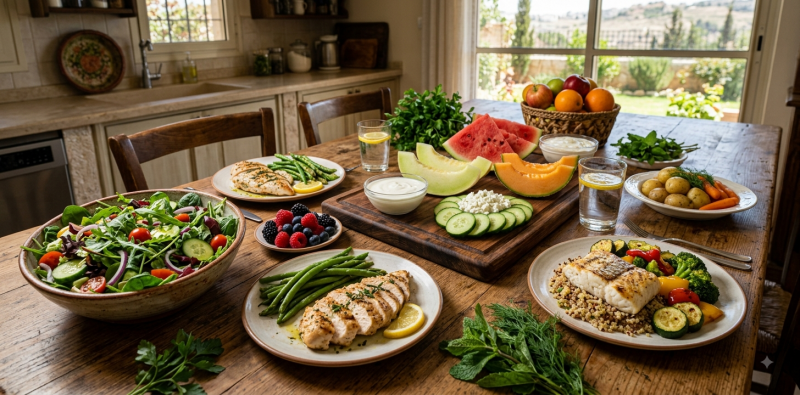
Low-calorie foods can help increase meal portions without significantly boosting total calories, especially when they are rich in water, fiber, or protein. This makes vegetables, fruits, and certain snacks suitable choices for those aiming to control food intake within a balanced diet.
However, lower calorie content doesn't always mean a food is suitable or should be solely relied upon. A healthy diet also requires protein, healthy fats, whole grains, and other nutrients. Therefore, these options are best used to add variety and volume to meals rather than excluding other foods.
Top Low-Calorie Foods to Include in Your Diet
There are various options available to add to daily meals, from water-rich vegetables to fruits, snacks, and lean proteins. You can select them based on your meal and nutritional needs.
1. Leafy and Firm Vegetables
Vegetables are among the top low-calorie foods to rely on for increasing meal volume, particularly those high in water and fiber.
{{PLACEHOLDER_0}}
Cucumbers: High in water content and low in calories, cucumbers are ideal as a snack or addition to salads and sandwiches.
Lettuce and Spinach: These leafy greens offer a large volume for relatively few calories, containing fiber and a range of vitamins and minerals. They can serve as a salad base or an addition to sandwiches and main dishes.
Zucchini: Known for low calories, it's versatile in various recipes, such as grilled slices or 'zucchini noodles' as a partial pasta alternative.
Cauliflower: Can be roasted or steamed, or even minced as a rice alternative, increasing dish volume with fewer calories compared to an equivalent amount of some starches.
2. Low-Calorie Fruits
Dieting doesn't mean forgoing fruits due to their natural sugars. Choosing varieties rich in water and fiber can offer a sweet taste with moderate calories.
Strawberries and Berries: These fruits offer a lower calorie density than many desserts while providing fiber, vitamin C, and beneficial plant compounds.
Watermelon: Being high in water, it's a refreshing choice, especially in hot weather, with attention needed to serving size when calculating daily total calories.
Cantaloupe: Offers a sweet, refreshing taste, consumed alone or added to yogurt and oats for a balanced snack.
3. Low-Calorie Snacks and Crunchy Treats
For those snack-cravings between meals, there are alternatives that provide a sizable portion with moderate calories.
Air-Popped Popcorn: As a whole grain, popcorn can be a suitable snack when prepared without excessive oil or butter. Caloric content varies by preparation and additions, so watch the oil and sauces used.
Rice Cakes: Plain rice cakes can be a base for snacks, topped with a small amount of low-fat labneh or other protein sources for a more balanced and filling option.
{{PLACEHOLDER_1}}
4. Low-Calorie Protein and Drink Sources
Low-calorie choices are not limited to fruits and vegetables, with some options providing protein or fluids with relatively limited energy.
Egg Whites: Offer protein with fewer calories than whole eggs, incorporated in omelets or mixed with whole eggs to boost protein without significantly increasing calories.
Clear Broth: Vegetable soups or clear chicken broth can serve as a light appetizer, although calories vary depending on ingredients and fat or salt used in preparation. Low-fat, low-sodium varieties are preferable.
How to Use Low-Calorie Foods to Increase Fullness
The idea of enhancing meals can be applied by increasing the amount of low-calorie vegetables in dishes. For instance, adding cucumbers, lettuce, and tomatoes to a tuna dish or mixing cauliflower with rice instead of a complete replacement.
Vegetables could also be added to chicken or fish and pasta dishes, increasing the meal's size while providing more fiber and water. However, it's crucial not to turn low-calorie food concepts into deprivation of healthy fats, protein, or complex carbohydrates, as a balanced diet remains essential.
Do Low-Calorie Foods Aid in Weight Loss?
Low-calorie foods can aid in weight loss when replacing higher-calorie foods and supporting a suitable calorie deficit. Increasing meal volume through vegetables, fruits, and water-rich foods may make a diet more filling and easier to sustain.
However, weight loss does not rely on a single type of food but on the total caloric intake, diet quality, physical activity, sleep, and other factors. Therefore, there's no need to restrict the entire day to extremely low-calorie foods.
In conclusion, low-calorie foods offer a practical way to add volume and variety to meals while controlling total calories. Beneficial options include vegetables like cucumbers, lettuce, spinach, zucchini, and cauliflower, alongside strawberries, berries, watermelon, and cantaloupe, as well as air-popped popcorn, egg whites, and light broths.
The best approach is to integrate these foods into a balanced diet that also includes adequate protein, healthy fats, and fiber-rich carbohydrates, making calorie control more manageable without sacrificing fullness or nutritional variety.
See Also:
10 Possible Reasons for Delayed Menstruation Without Pregnancy