



Self-development books vary widely, focusing on daily habit changes, productivity, time management, understanding how the mind works, and decision-making. Choosing the right book depends largely on the reader's goals, whether it's breaking a bad habit, improving focus, developing relationships, or achieving greater psychological balance.
However, self-improvement books do not offer magical solutions or instant results. They provide ideas and tools that can be transformed into daily practices. Hence, choosing books that combine clear ideas with practical applications is important rather than just reading without behavior change.
Top Self-Development Books Worth Reading
The following list combines globally recognized books in the realms of habits, productivity, psychology, and life philosophy, suitable for beginners and readers wanting a more aware and organized self-improvement approach.
1. Atomic Habits – James Clear
Atomic Habits by James Clear is one of the most famous modern books in habit building. It emphasizes that small, consistent changes can lead to significant long-term results, offering practical strategies for building positive habits and gradually eliminating undesirable behaviors.
The book's strength lies in its focus on the daily environment, illustrating how modifying surroundings and pre-behavior factors can facilitate adopting new habits, making it an ideal choice for those wanting to start with simple, applicable steps.
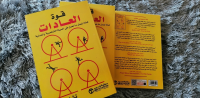
2. The Power of Habit – Charles Duhigg
The Power of Habit explains how habits form and can be changed by understanding the habit loop: cue, routine, and reward.
The book benefits from diverse research, studies, and examples to clarify how habits influence daily life, work, and institutions, making it suitable for those wanting to understand the scientific and behavioral aspects behind habit repetition and the difficulty of breaking them.
3. Getting Things Done – David Allen
Getting Things Done focuses on organizing responsibilities and thoughts to reduce distractions and enhance focus. David Allen offers a system known as GTD, transferring tasks and ideas from memory to an organized external system.
The book suits individuals feeling overwhelmed by commitments or struggling to prioritize, helping them divide projects and tasks into manageable steps rather than letting them constantly occupy the mind.
4. The 5 AM Club – Robin Sharma
The 5 AM Club is based on utilizing early hours for self-development and working on personal and professional goals. Robin Sharma presents his ideas through a narrative style blending personal development with motivation.
While it encourages building an organized morning routine, the key point isn't waking up at 5 AM specifically but dedicating a calm, consistent time to focus on priorities before daily pressures begin.
5. Thinking, Fast and Slow – Daniel Kahneman
Nobel Laureate Daniel Kahneman provides an in-depth explanation of how the mind works in thinking and decision-making in Thinking, Fast and Slow.
The book introduces two thought systems—one fast and automatic, the other slower and more analytical—demonstrating how intuition and cognitive biases affect judgments and decisions, making it essential for understanding deeper thinking processes.
6. Emotional Intelligence – Daniel Goleman
Emotional Intelligence discusses the significance of understanding, managing emotions, and interacting with others' feelings. Daniel Goleman argues that success isn't solely dependent on academic abilities or traditional IQ but also on emotional and social skills.
Thus, the book is beneficial for those wishing to improve personal and professional relationships and develop communication skills and handling difficult situations.
7. The Subtle Art of Not Giving a F*ck – Mark Manson
The Subtle Art of Not Giving a F*ck offers a distinct view from traditional self-help books that focus relentlessly on positive thinking. Mark Manson emphasizes accepting problems and difficulties instead of trying to eliminate them entirely.
The book highlights the importance of choosing what matters, understanding limits, and taking responsibility for choices, providing a different perspective on happiness, personal goals, and handling stress.
8. The Monk Who Sold His Ferrari – Robin Sharma
The Monk Who Sold His Ferrari mixes storytelling with self-development lessons, focusing on a personal journey seeking a deeper life meaning beyond mere material success.
Discussing topics such as discipline, balance, inner peace, and priority setting, it's suitable for readers who prefer learning through a story carrying motivational and philosophical messages.

9. Start With Why – Simon Sinek
Start With Why emphasizes understanding the underlying reason behind goals, actions, and decisions. Simon Sinek posits that influential people and organizations clarify why they act, not just what they do.
This concept applies to personal life and work, aiding in setting clearer, more consistent goals by identifying the fundamental purpose and motivation.
10. The Power of Now – Eckhart Tolle
The Power of Now focuses on awareness of the present moment, reducing constant preoccupation with past or future. Eckhart Tolle offers insights into mindfulness and human interaction with thoughts and emotions.
This book may appeal to those seeking reflective reading focusing on internal tranquility and mental presence rather than productivity and traditional achievements.
How to Choose the Right Self-Development Book?
The ideal choice depends on the goal you want to achieve. For building new habits, starting with “Atomic Habits” or “The Power of Habit” might be beneficial, while “Getting Things Done” suits those seeking time and responsibility management.
If you're interested in understanding thinking processes and decision-making, then “Thinking, Fast and Slow” could be a deeper option, while “Emotional Intelligence” benefits those wanting to improve relationships and social skills. Conversely, for a different life perspective, “The Subtle Art of Not Giving a F*ck” or “The Power of Now” could be intriguing.
In conclusion, top self-development books provide diverse ideas aiding in self-understanding, habit building, time organization, and improving relationships and decision-making.
However, the actual value of these books isn’t in the number of pages read but the ideas implemented after closing the book.
It's better to choose one book aligning with your current goal and apply its ideas gradually rather than jumping between books without practicing what you learn. True change begins when knowledge translates into daily, continuous habits and behaviors.
See Also
Best Ways to Treat Dry and Damaged Hair