


Understanding the financial transfer fees in Lebanon has become essential for individuals and businesses. This necessity arises from the variety of available options, including banks, money transfer companies, and electronic wallets. The final cost varies among institutions depending on the amount, currency, account type, and whether the transaction is local or international.
The cost is not limited to the basic commission as correspondent bank fees or recipient institution charges may also apply in some international transfers. Thus, it is crucial to be aware of all potential fees and compare available options to choose the most cost-effective method for transfers.
Local Transfer Fees in Lebanon
Fees for local transfers vary among Lebanese banks according to currency, account type, and individual bank policies.
Fresh Dollar Transfers
Fresh dollar transfers are one of the most popular types of transfers for moving funds between bank accounts. Reports suggest local transfer fees in dollars range between $5 and $15 per transaction, with potential additional charges from the receiving entity.
It is advisable to inquire about total fees before executing a transfer, rather than just the basic commission.
Lebanese Lira Transfers
Transfer fees in Lebanese Lira vary from bank to bank and may include operational, clearing, and related banking service fees, differing by institution and transfer type.
Salary Transfers
Specific rules govern accounts used for payroll localization, differentiating regular transfer fees from those related to salary accounts. It’s advisable to consult the bank for details on applicable fees, especially due to ongoing updates to banking systems and regulations.
International Transfer Fees to and from Lebanon
International transfer costs differ as they may involve multiple financial institutions, including the correspondent bank.
Incoming International Transfers
Fees may be imposed by the Lebanese or correspondent bank depending on the transfer route and bank conditions. Estimates suggest some incoming dollar transfers may incur around $25 in fees, but actual costs vary by bank, amount, and the country of origin.
It is important to verify fees before sending funds, particularly when transferring small amounts as fixed commissions can significantly impact the transfer value.
Outgoing International Transfers
Outgoing transfers typically incur banking and SWIFT network fees and correspondent bank charges. Some fees start around $30, reaching $50 or more depending on the bank and fee-sharing arrangements.
The cost also varies based on how fees are divided between sender and recipient.
Understanding OUR and SHA Options in International Transfers
During international transfers, fee-bearing options may be provided.
OUR Option: Implies that the sender bears all charges according to agreed terms, ensuring the recipient receives the full amount with minimal deductions.
SHA Option: Charges between sender and recipient are shared, with each party responsible for charges incurred by their respective sides of the transfer.
This choice is significant when ensuring a fixed amount reaches the recipient without reductions.
Using Money Transfer Companies in Lebanon
Beyond banks, many Lebanese rely on money transfer companies for local and international transactions.
Notable options include OMT and Wish Money, as well as other electronic services and wallets with varying fees depending on the amount and type of transaction.
OMT Transfer Fees
OMT offers local and international money transfer services, including Western Union. Fees are based on the amount, destination, and transfer type.
Local transfer fees start from specific amounts for smaller remittances, increasing with the transfer value according to the service price list.
For international transfers, fees vary by destination, amount, and transfer method; checking the final price before making a transfer is recommended.
Wish Money Transfer Fees
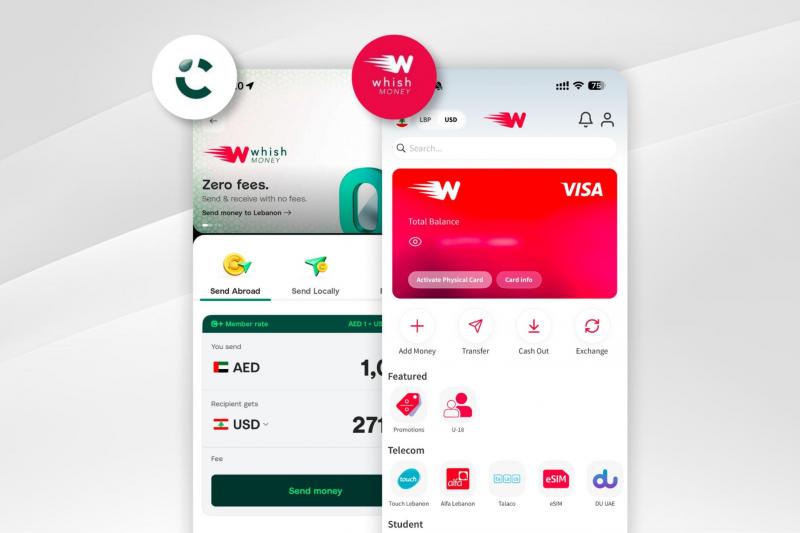
Wish Money provides financial services and local transfers through an extensive network of service points and electronic wallets.
Fees depend on the remittance value, with tiered pricing for different amounts.
A key service feature is the ability to make transfers between Wish Money wallets under conditions and fees distinct from traditional cash transfers.
Is Bank Transfer Better Than Money Transfer Companies?
There is no one-size-fits-all answer as the choice depends on the transfer amount, recipient, and required speed.
For large sums between bank accounts, bank transfers may be more appropriate, especially when both parties have compatible bank accounts.
For sending small amounts or quickly receiving cash, money transfer companies may be more practical.
Electronic wallets are suitable for local transactions and small sums, particularly when transfers are low-cost or free among service users.
How to Reduce Transfer Fees?
To minimize costs, consider the following steps:
1. Compare fees before transferring between banks and money transfer companies.
2. Inquire about potential additional charges from correspondent banks.
3. Avoid small transfers with high fixed fees if cheaper alternatives are available.
4. Check exchange rates for currency conversions.
5. Confirm the final amount reaching the recipient before proceeding.
6. Compare OUR and SHA options in international transfers.
7. Use electronic wallets when suitable, offering lower fees.
8. Review the institution’s official fee schedule before making a transfer, as prices and conditions may change.
Best Option for Small Transfers to Lebanon
When sending a small amount to Lebanon, comparing the commission as a percentage of the transfer value is crucial.
For instance, a fixed commission of $25 has a larger impact on a $200 transfer than on a $2000 one.
Thus, specialized money transfer services or electronic wallets may be better options. The final decision depends on the sender’s originating country, transfer and exchange rates, and applicable fees on the day of transfer.
What Information to Know Before Sending a Transfer?
Before finalizing a transfer, it’s recommended to know:
- Basic commission fee.
- Correspondent bank fees, if any.
- Receiver's institution fees.
- Exchange rate applied.
- Currency in which the recipient will receive the funds.
- Final amount reaching the recipient.
- Expected transfer arrival time.
- Documents required to complete the transaction.
- Daily or monthly transfer limits.
Conclusion
Transfer fees in Lebanon vary significantly across banks and money transfer companies based on currency, amount, and type of transfer. Distinctions are also evident between local and international transfers.
While banking transfers are suitable for large amounts and bank accounts, money transfer companies and electronic wallets provide more flexibility for smaller, everyday transfers. Therefore, comparing the overall cost and recipient amount is vital before choosing the transfer method.