


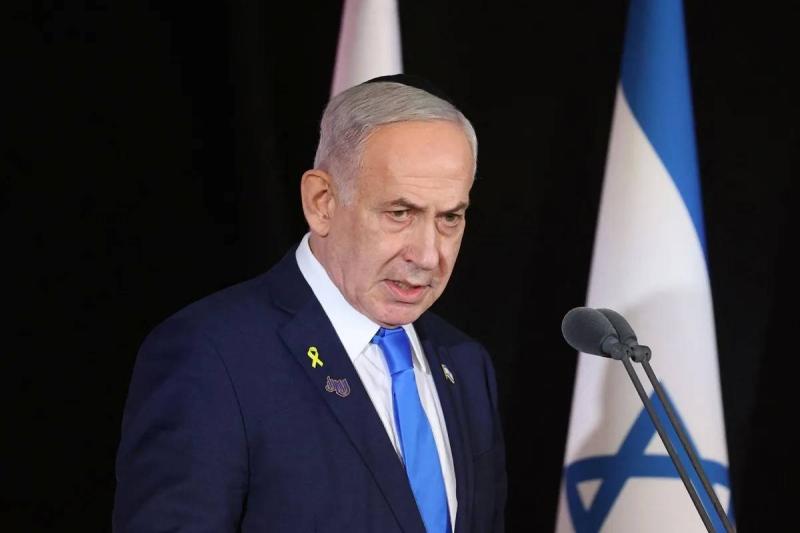
Israeli Prime Minister Benjamin Netanyahu has intensified his rhetoric against the establishment of a Palestinian state, declaring that as long as he is in office, such a state will not exist. His comments were a direct response to Ra'am Party leader Mansour Abbas, who noted that the State of Palestine is recognized by most countries worldwide, and aims for Israeli and American recognition.
In a statement on Saturday evening, Netanyahu stated, "As long as I am Prime Minister, there will not be a Palestinian state under Iranian control, neither in Gaza nor in the West Bank. Finished."
This retort came after Abbas, during a conference introducing his party's candidates for the upcoming parliamentary elections, asserted that "Palestine exists and is recognized by a majority of countries." He added that Ra'am seeks to gain recognition from both Israel and the U.S.
Netanyahu not only rejected Abbas's proposal but also shifted the confrontation to political alliances and election dynamics, accusing his political adversaries of preparing to collaborate with Arab parties to gain power.
He claimed that Abbas's comments reveal "the consequences of a left-wing alliance with the Muslim Brotherhood," alluding to Ra'am's Islamic roots.
Netanyahu also criticized a group of his political opponents, linking them to potential reliance on Arab party votes to form an alternative government.
His statements underscore a clear strategy to make Palestinian statehood and Arab party participation in future government coalitions central issues in the election campaign.
Joining the fray, Yesh Atid Party leader Gadi Eisenkot also dismissed the idea of a Palestinian state if he were to form the next government.
In response to Abbas, Eisenkot asserted, "No Palestinian state will be established in the government we will form," highlighting the sensitivity of the Palestinian issue within the Israeli electoral contest.
In contrast, Abbas presented an alternative vision, acknowledging the widespread international recognition of Palestine as a starting point to persuade Israel and the U.S. to change their positions.
Abbas reiterated that Ra'am is committed to peace and reconciliation, depicting Arab citizens in Israel as capable of being "bridges for peace."
He also called for rebuilding cooperation among Arab political forces, as parties gear up for elections with a focus on capturing Arab voter support.
Abbas addressed the alliance of the three other Arab parties, excluding Ra'am, encouraging a "new chapter" of relations with them.
He suggested reaching an agreement for vote-sharing among Arab lists, which could reduce wasted votes and enhance Arab party representation in the next Knesset.
Abbas argues that a potential Arab party role in a future coalition is no longer a fringe issue but a central part of Israeli political discourse, viewing the party's participation as a test of Israel's democracy.
The Ra'am party previously broke political taboos by joining the Israeli government coalition formed in 2021, making Arab party participation a factor in future political calculations.
This latest debate reveals that the upcoming elections will focus not only on economic and security matters but also on the sensitive topics of Palestinian statehood and the impact of Arab parties on forming the next Israeli government.
The confrontation featuring Netanyahu and Eisenkot's rejection of a Palestinian state exists alongside Abbas's persistence for Israeli recognition, thrusting the Palestinian issue into the heart of the electoral battle, alongside the maneuvering over post-election alliances.