


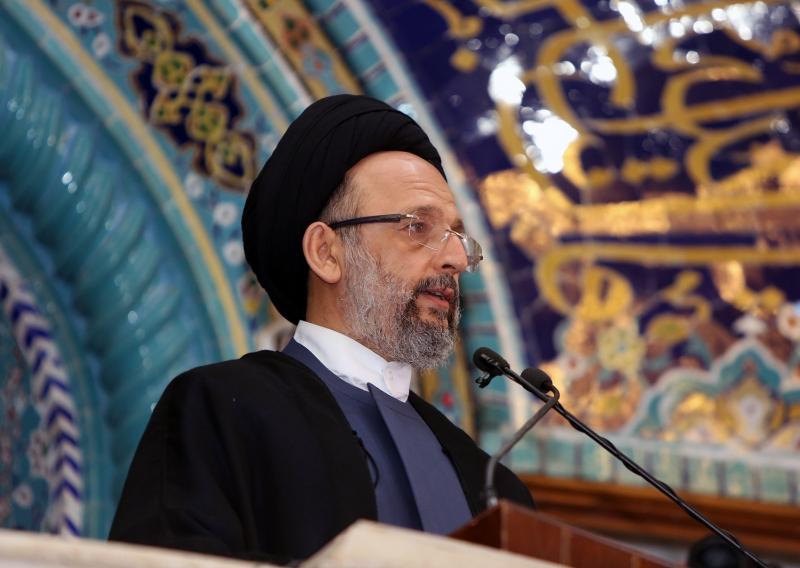
Scholar Sayyed Ali Fadlallah hosted a cultural dialogue at the Islamic Cultural Center in Haret Hreik titled "Imam Al-Sadiq... Imam of Knowledge and Dialogue." The discussion highlighted key aspects of Imam Jaafar Al-Sadiq's character, his journey in knowledge, and his approach to dialogue, while also addressing current Lebanese affairs.
Fadlallah began the meeting by recalling the birth of Imam Jaafar bin Muhammad Al-Sadiq, noting his reputation for knowledge, patience, worship, good manners, generosity, and giving.
He emphasized that Imam Al-Sadiq's scholarly role was evident in his Kufa mosque, a gathering place for students from various Islamic regions who found answers to their queries there.
Fadlallah affirmed that Imam Al-Sadiq's school was marked by openness to diverse jurisprudential, intellectual, and doctrinal views and promoted dialogue as the best way to communicate with others and convey ideas.
Fadlallah stated that Imam Al-Sadiq engaged in discussions with those differing in sects and beliefs, as well as with extremists and skeptics, turning many tense dialogues into productive discussions leading to truth.
He stressed the need for a dialogue approach based on listening and openness, advocating for the revival of genuine Islamic roles and enhancing dialogue to alleviate tension, inspired by Imam Al-Sadiq's inclusive love for everyone.
In response to a question about the relationship between the late Sayyed Muhammad Hussein Fadlallah and Imam Sayyed Musa Al-Sadr, Fadlallah confirmed their excellent relationship, contrary to rumors of estrangement, referencing meetings in the Nabaa area.
He explained that both figures believed in dialogue, Islamic unity, and sought national unity for all Lebanese, emphasizing the responsibility today is to continue this path to preserve the country's unity and civil peace.
He warned of ongoing divisive ideas and federalism, with political forces founded on inciting strife and divisions, in addition to external factors aiming to increase internal disunity for their interests.
Fadlallah emphasized that those sincere and aware should defuse any conflict, warning that everyone loses in such scenarios, benefitting only those wishing further division and weakness for Lebanon.
On the electricity generators issue, Fadlallah noted existing laws yet stressed the failure in their application. He called on the state for decisive action to enforce laws and penalize culprits, urging fairness in their application.
Fadlallah urged generator owners to consider citizens’ conditions, especially the poor, and called on influential entities to assist the state amid the heavy economic and living burdens.
He asserted the responsibility of state institutions to act rapidly, fulfill duties, and alleviate citizens' burdens.
Concluding the dialogue, Fadlallah described Israel’s release of prisoners as important but superficial and incomplete, failing to address core issues and achieve a final solution.
He stressed internal unity as Lebanon’s safeguard against challenges and pressures, calling for the strengthening of national unity and avoiding actions deepening divisions or weakening Lebanese resilience amidst regional and national challenges.