


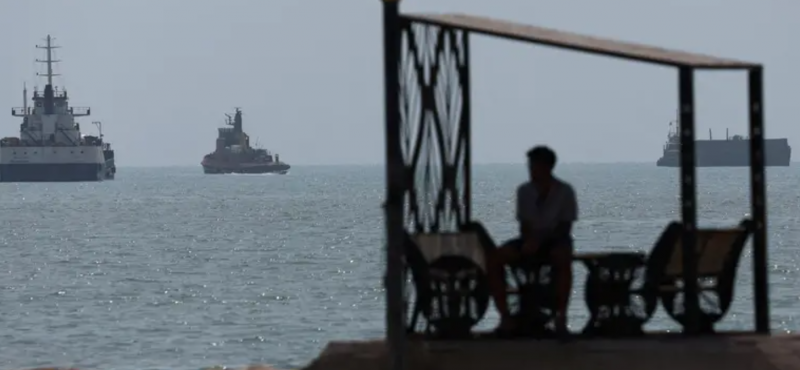
As tensions rise over ship warfare and attacks on tankers in the Strait of Hormuz, Iran is intensifying its confrontation with the United States in a bid to break a stalemate in this critical waterway, which is strangling its economy.
Last week, Iranian forces launched missiles at U.S. warships, including an aircraft carrier, at least three times, directly targeting the U.S. Navy in a manner not previously seen since the start of the conflict.
On Wednesday, Iran fired a large salvo of missiles at U.S. forces stationed in Jordan.
"Maneuverable Warheads"
Sources familiar with the attacks revealed that the attempts to target the warships were closer to hitting their marks compared to previous attempts, as Iran employed warheads capable of maneuvering in-flight, according to The Wall Street Journal.
They noted that Iran used medium-range ballistic missiles launched from various sites within the country, covering hundreds of miles at very high speeds. These missiles are equipped with advanced technology, enabling them to maneuver toward moving targets, making them more dangerous than many of Iran’s other weapons.
Despite this, the U.S. Central Command, responsible for military operations in the Middle East, confirmed that the warships managed to evade the attacks.
Assistance from Russia and China?
These attacks have heightened concerns among U.S. officials that Iran may have enhanced its capabilities to target ships, possibly with assistance from Russia or China, according to the same sources.
This escalation is pushing the conflict into a more perilous phase; an actual strike on a U.S. warship would likely prompt a violent American response and could reignite a broad-scale war.
This development marks a significant escalation from the calculated strikes Iran had been conducting in recent weeks against commercial ships in the strait and less sensitive American targets in Kuwait, Bahrain, and Jordan.
19 Ships Blocking Ports
It appears Tehran has become more aggressive amid mounting economic pressures. Nineteen U.S. navy ships are enforcing a blockade on Iranian ports, halting Iranian oil exports, while new U.S. sanctions have disrupted Iran’s financial situation, leading to a currency devaluation and forced government fuel subsidy cuts.
In this context, Mark Sievers, a former U.S. Ambassador to Oman, noted, "Iran is escalating because it sees no other options, facing immense pressure from the blockade and new sanctions."
Analysts believe Tehran’s goal is not to confront U.S. military power directly but to make the current stalemate unsustainable.
While Washington can destroy launch platforms and clear mines, Iranian threats to warships and commercial trade aim to deplete the U.S.’s dwindling stockpile of defensive interceptor missiles, forcing ongoing evaluation of the cost of military response.
Alice Gower, a partner at Azure Strategy, a political risk consultancy in London, suggested Iran might find gains even in the risks tied to successfully hitting a U.S. warship. Damaging a U.S. ship would present President Donald Trump with two difficult choices: a costly retaliatory strike or appearing weak ahead of midterm elections.
However, former officials and analysts maintain these attacks would not compromise the effectiveness of the American blockade, as warships can be moved further from Iranian shores without hindering the blockade.
Squeezing Oil Exports
The recent round of hostilities began in late August when U.S. forces targeted Iranian sites following Tehran’s attempt to plant mines in the Strait of Hormuz. Iran retaliated by targeting U.S. forces and oil tankers.
The U.S. responded by targeting Iranian oil tankers, while Iran attempted to strike back at warships.
The U.S. naval blockade continues to choke Iranian oil exports in the Persian Gulf, with floating Iranian oil reserves earmarked for China nearing depletion.
No Iranian crude oil has crossed the blockade since the U.S. Navy re-imposed it in mid-July, according to Kpler. This pressure has deprived Tehran of its primary source of hard currency, exacerbating the economic crisis with a significant fall in the Iranian rial and inflation soaring over 80% year-on-year.
The International Monetary Fund anticipates a 5.4% contraction in Iran’s economy this year, marking the worst downturn since the 1980s.