


The New York Times has reported on a significant internal struggle within Iran that thwarted a potential agreement to end the standoff with the United States. The conflict arose when a hardline faction within the Iranian regime independently executed attacks on commercial vessels in the Strait of Hormuz.
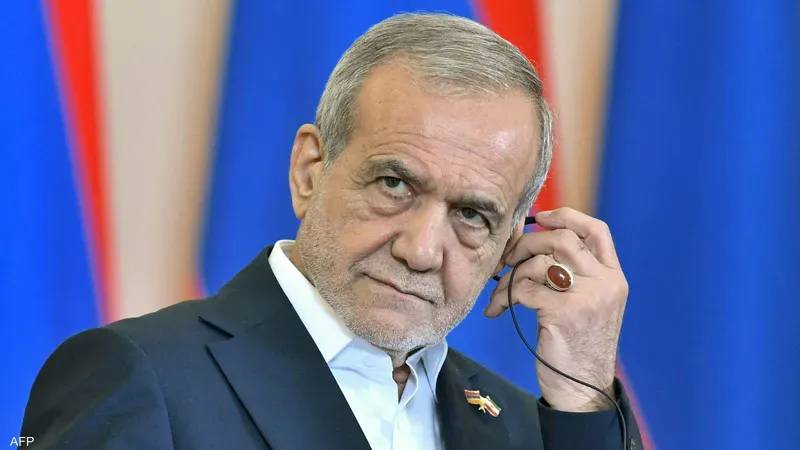
The report, based on insights from Iranian officials, members of the Revolutionary Guards, and sources close to decision-making circles, revealed that Iranian President Masoud Bazshekian was optimistic in early July about ending the conflict. This optimism followed a memorandum of understanding with President Donald Trump's administration.
However, a series of attacks in the Strait of Hormuz changed the situation dramatically.
Unaware Leadership
The Times noted that Iranian forces fired upon three commercial vessels in the strait, igniting a Qatari-flagged LNG tanker and damaging other ships. Upon learning of the attack, Bazshekian contacted Revolutionary Guards Commander Ahmad Vahidi for an explanation.
Five Iranian officials and two Revolutionary Guards members reported that Vahidi informed Bazshekian he was neither aware of nor authorized the attack. The Supreme National Security Council, crucial in managing the war and negotiations, was also unaware of the operation.
Investigations, as per the newspaper's account, pointed to a hardline faction acting outside conventional decision-making processes.
According to three Iranian officials, governmental and security inquiries linked the attack decision to Hossein Taeb, an influential security official who opposed the U.S. agreement from the start.
Ali Reza Namour Haghghi, a former Iranian official still connected to governmental circles, told the Times that the attacks aimed to undermine the memorandum with Trump, halting further negotiations or agreements.
The Continuation of Conflict
Bazshekian was away from Tehran during the attacks but returned swiftly as the crisis unfolded.
Events accelerated quickly; the next morning, the U.S. retaliated with strikes against Iran, resuming military confrontation. This broke a period when the Tehran faction favoring talks hoped to end the war.
These revelations, if accurate, indicate intense division within the Iranian leadership between Bazshekian's faction, which pushes for settlement to ease economic pressures, and more hardline factions fearing concessions to Washington could weaken Iran's strategic advantages.
Disagreements emerged following the memorandum's signing, with Bazshekian and negotiators facing criticism from hardliners, who opposed concessions on issues like the Strait of Hormuz.
The New York Times connects hardliners' maneuverability to the ambiguity surrounding new Supreme Leader Mojtaba Khamenei, who succeeded his father, Ali Khamenei, after his death in the war.
Since his appointment, Mojtaba has largely avoided public appearances, raising questions about his health and his direct involvement in exercising authority.
This is crucial in Iran, where the Supreme Leader adjudicates conflicts among political, military, and security institutions.
With no decisive intervention from the top, power centers seem increasingly capable of advancing their agendas concerning war and negotiations.
An Ongoing Struggle
The situation doesn’t mean negotiations are off the table entirely. Bazshekian remains a proponent of dialogue, driven by Iran's economic pressures, while hardline factions insist on conditions involving sanctions and Iran's influence in the Strait of Hormuz.
These revelations emerge amid ongoing tension, with Washington intensifying economic pressures on Tehran and persistent strife over maritime navigation in Hormuz.
The narrative of the failed agreement exposes another battle behind the war's frontlines: a conflict within Iran's regime over whether Tehran should seek a war exit or if hardline powers can still block any settlement pathway.