


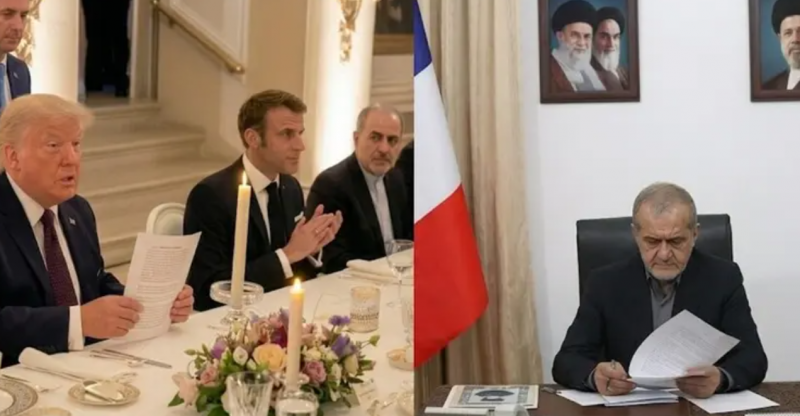
The next 60 days will present challenges," described Suzy Wiles, Chief of the White House, regarding the discussions set for tomorrow, Friday, between Iranian and American delegations in Switzerland.
Wiles confirmed in an X post on Thursday that U.S. President Donald Trump's trip to France was immensely successful.
She added that the trip concluded with a delightful dinner and a birthday celebration for Trump at the Palace of Versailles. She remarked, "It was truly a wonderful event, especially after an intense agenda filled with bilateral meetings and various working sessions. No one works harder than him."
"A Significant Step Forward"
Wiles also noted that the President signed a memorandum of understanding with the Iranians during the dinner. She added, "Although the next sixty days will see challenges as we work on important details, the signing was a significant step forward for America, and indeed for the world."
She shared a photograph of the signing, saying, "Enjoy this image of President Trump signing the document amid flowers, with the presidential procession entering through the front gates of the Palace of Versailles."
Immediate Implementation
Earlier today, Pakistan's Prime Minister, Shehbaz Sharif, announced that the agreement between the United States and Iran took immediate effect following the signatures from both parties, despite a formal signing ceremony still scheduled for Friday. Sharif, whose country helped mediate between the parties, posted on X that Tehran will "immediately" reopen the Strait of Hormuz, and Washington will "immediately" lift the naval blockade on Iranian ports, according to DPA.
Sharif added, "Pakistan, with the backing of mediator Qatar, will host the official ceremony scheduled for June 19, 2026, in Switzerland, to celebrate this historic event and commence technical-level talks."
This announcement followed that of Iranian and American officials confirming the electronically signed framework agreement aiming to end the war, which has now come into force.
Both parties agreed to commence negotiations aiming for a final settlement within a maximum of 60 days, with the possibility of extending this period by mutual agreement. They also agreed on halting hostilities "on all fronts."
The sides committed to "respect each other's sovereignty and territorial integrity and refrain from interfering in the internal affairs of the other."
According to the agreement text, the U.S. naval blockade imposed on Iran will be fully lifted within 30 days of signing the framework, with Iran reopening the Strait of Hormuz and permitting shipping traffic without tolls for 60 days, thereafter negotiating arrangements with regional countries to manage this strategic passage.
Iran had significantly disrupted maritime traffic in the strait, a vital passage for global oil, gas, and fertilizer trade, soon after the war began in late February through threats and attacks on ships.
In response, the U.S. later imposed a naval blockade on Iranian ports to deprive Tehran of its oil revenues.
After weeks of negotiations, the two countries reached a framework agreement last Sunday, aimed at paving the way for subsequent talks, including on Iran's controversial nuclear program.