


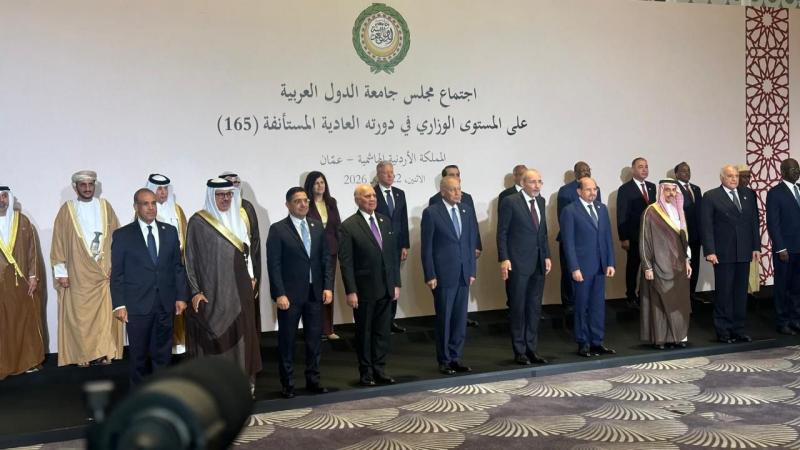
Lebanon's Foreign Minister, Youssef Raji, participated in the 165th session of the Arab League's Council, held in Amman at the ministerial level, with critical files impacting Lebanon's negotiation and regional fate on the table. During the meeting, Raji expressed gratitude to Secretary-General Ahmed Aboul Gheit for concluding his term and the election of a new Secretary-General, lauding Aboul Gheit's supportive stance towards Lebanon over the years and his efforts in defending its interests.
Preceding the opening session, a closed-door consultative meeting took place where Raji delivered a speech detailing recent diplomatic and negotiation developments, asking Arab nations for explicit support to maintain Lebanon's negotiation path independent of American-Iranian influence. Raji emphasized that Lebanon should be an active participant in any regional framework assessing the Middle East's future, rather than having its fate decided at tables it is not seated.
On the sidelines of the Arab League's ministerial meeting, Raji conducted several side meetings with various foreign ministers, including an extended discussion with European Commission Vice President Kaja Kallas. Their talks covered Lebanon's situation amidst direct negotiations with Israel under U.S. auspices, as well as the post-UNIFIL situation in South Lebanon and proposed solutions, in addition to the economic and financial reforms initiated by the Lebanese government.
Raji thanked the European Union for its consistent political and humanitarian support for Lebanon and detailed the significance of the negotiation path as the only way to secure stability and ensure state sovereignty over its entire territory, referring to the Lebanese government's firm stance that only legitimate forces should possess arms. He emphasized the importance of separating Lebanon's path from the American-Iranian path, asserting that decisions concerning Lebanon must be made solely by the Lebanese state. Raji also highlighted the necessity for Lebanon to be a true partner in any regional discussion concerning the area's future.
He concluded by urging the European Union for substantive support in facilitating the return of Syrian refugees to their homeland, noting that Lebanon has reached the limits of its capacity in managing this issue.
In response, Kallas affirmed the European Union's steadfast support for the Lebanese government and its decisions, reiterating Europe's unwavering backing for state sovereignty.