


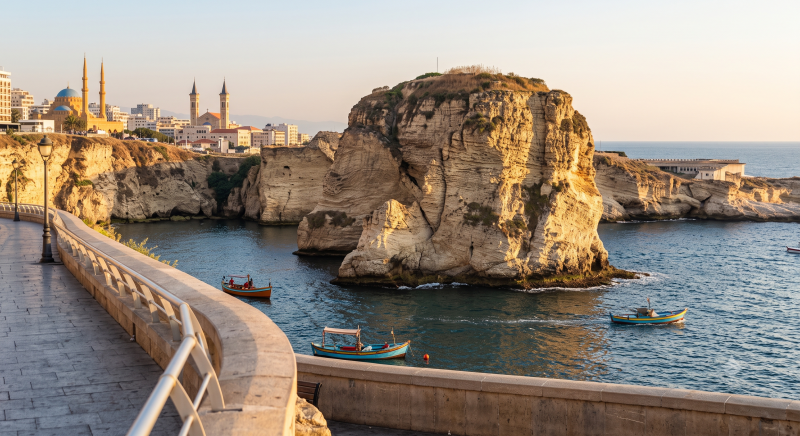
Standing proudly against the Beirut coastline, Raouche Rock is one of Lebanon's most iconic natural landmarks. This colossal rock formation in the middle of the Mediterranean has become an integral part of the Lebanese capital’s identity.
Thousands of tourists and locals flock to the Raouche area annually to witness this natural wonder, capture photographs, and relish the sea view, particularly during sunsets when the scenery turns mesmerizing.
However, beneath this natural beauty lies a rich story interwoven with geological formations, folklore, and the historical significance the rock has acquired over time.
The Story Behind Raouche Rock
Raouche Rock originates from natural rock formations sculpted over thousands of years by marine erosion, wind, and waves eroding the rocks along Beirut’s coast.
The rock comprises two massive stone blocks. The larger one features a famous natural arch through which seawater passes, making it one of Lebanon's most distinguished natural vistas.
Over time, the rock has become a major attraction for locals and visitors alike, turning into one of the visual symbols associated with Beirut.
Why is it Called Raouche Rock?
There are several stories regarding the origin of the name "Raouche." One of the most prevalent is that it derives from a foreign word meaning "rock," a nod to the nature and rocky composition of the place.
Additionally, there are tales linking the name to old local dialects used to describe rocks or elevated areas overlooking the sea.
Despite differing narratives, the name Raouche remains firmly linked to this famous coastal area in Beirut.
Secrets of Raouche Rock
1. Its Unique Natural Formation
A striking secret of the rock is its unusual shape. The opening in one of the stone masses resulted from long natural processes over thousands of years, undisturbed by human intervention.
This shape has contributed to making it one of the most photographed sites in Lebanon.
2. Associated with Legends and Folklore
Raouche Rock has been linked with numerous folk tales. Some believe it bears special symbolism due to its location and distinctive shape.
Among the circulating stories are those tied to ancient maritime legends. However, most of these tales remain embedded in folklore without historical validation.
3. Its Site Offers Spectacular Sunsets
Many consider Raouche Rock’s location to add extra allure as it faces the open sea, offering a striking scene at sunset when the sky changes colors and reflects on the sea's surface. Consequently, the rock stands as one of Beirut’s most renowned photography spots.
4. Connection to Beirut’s Memory
Raouche Rock is more than a natural landmark; it has become part of the city’s memory, appearing in old photographs, postcards, and media pieces about Beirut.
Best Ways to Enjoy a Visit to Raouche Rock
Visitors can enhance their experience by:
- Strolling along the Raouche Corniche.
- Viewing the rock from nearby sea lookouts.
- Dining or having coffee at one of the sea-facing restaurants and cafes.
- Taking a boat tour to see the rock up close.
- Visiting at sunset to enjoy the best views.
Best Time to Visit Raouche Rock
Sunset is considered the most splendid time to visit Raouche Rock, offering perfect lighting for photography and a more serene and beautiful atmosphere.
Spring and fall are ideal seasons due to pleasant weather, while summer tends to be busier.
See also:
Best Time to Visit Raouche in Beirut