


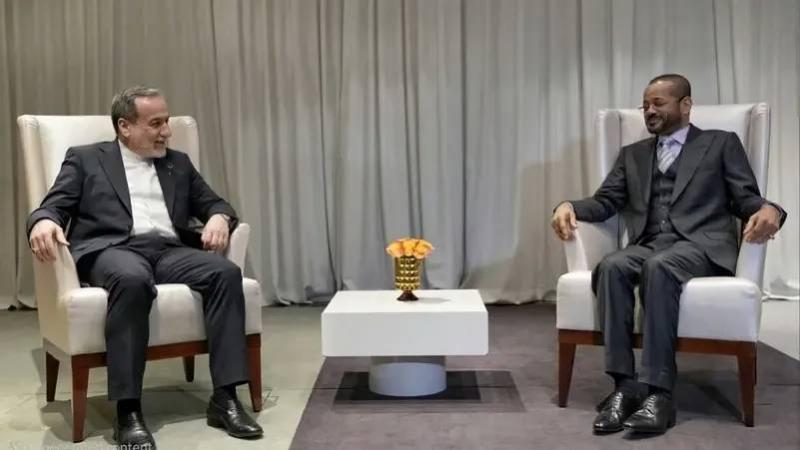
Iranian Foreign Minister Abbas Araghchi, along with his Omani and Turkish counterparts, highlighted the importance of diplomatic channels and continued coordination to prevent escalation in the region.
This consensus emerged from separate phone discussions concerning the current situation in the Strait of Hormuz amidst intense talks aimed at containing tensions and reverting to de-escalation, according to the Iranian Foreign Ministry.
On Thursday, the US again targeted Iran, which retaliated by attacking Washington's allies in the region. Iran accused its adversaries of trying to distract from the funeral of Supreme Leader Ayatollah Ali Khamenei.
US airstrikes resulted in 17 deaths and 93 injuries in Iran since hostilities renewed the previous day, despite an existing memorandum of understanding to cease conflict, as per the latest health ministry figures.
These hostilities weaken the truce that US President Donald Trump declared as "over," casting harsh criticism on Iranian leaders whom he labeled as "sick people" with whom he no longer wishes to "engage."
Trump tweeted alongside a photo seemingly showing a bombing of an Iranian site, stating, "This is retaliation for Iran's strikes on ships yesterday. If it continues, it will get much worse!"
Washington accused the Iranian military of launching attacks on at least three ships in the strategic Strait of Hormuz on Tuesday.
Iran refuses to return to the pre-war state and asserts its right to impose fees on vessels using the maritime passage.
Senior Iranian negotiator and Parliament Speaker Mohammad Bagher Ghalibaf stated on Thursday that the Strait of Hormuz would only be open under "Iranian arrangements."
Ghalibaf tweeted, "The United States has yet to learn that bullying and reneging on promises no longer go unchecked," adding, "Let me be clear: if you strike, you will be struck."
90 Iranian Military Targets
US military officials stated that approximately 90 Iranian military targets were hit in recent strikes, which focused on air defense systems, missile storage sites, and drones.
However, Iran accused the US of targeting civilian infrastructure, including bridges and the rail line connecting Tehran and Mashhad (northeast), to divert attention from the scheduled funeral of the former Supreme Leader Ayatollah Ali Khamenei at 2:00 PM (10:30 GMT).
The Revolutionary Guard stated that American forces targeted two bridges in the eastern provinces leading to the city of Mashhad in an "anti-civilian act," attempting to obscure news of this unprecedented event from the world's view.
The strikes also affected the area around the nuclear power plant in Bushehr province (south), which had been targeted during the war, according to an Iranian official.
In retaliation, Iran targeted sites in Bahrain and Kuwait, while sirens blared in Jordan, which announced the interception of Iranian missiles.
Diplomacy's Importance
Two weeks ago, Oman and Iran emphasized utilizing the current diplomatic moment to support peace initiatives and enhance détente and stability in line with international law and good neighborliness principles, thereby enhancing de-escalation opportunities and ensuring the region's security and marine navigation safety in the Strait of Hormuz and international corridors.
This was reported by the "Omani News Agency" when Foreign Minister Badr Al-Busaidi welcomed Iranian Parliament Speaker Mohammad Bagher Ghalibaf, Foreign Minister Abbas Araghchi, and the accompanying delegation during an official visit to Oman.
The agency added that the meeting discussed cooperative and neighborly relations between Oman and Iran and ways to develop them to benefit mutual interests, alongside exchanging views on regional developments.