


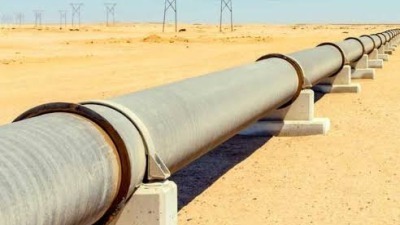
Iraq and Syria have signed a memorandum of understanding on Friday to rehabilitate the oil pipeline extending from the Iraqi city of Haditha to the Syrian port of Baniyas. This strategic project, to be executed by Chevron, aims at reconnecting Iraqi oil to Mediterranean ports.
The agreement was signed at the American Chamber of Commerce summit in Washington, attended by US Energy Secretary Chris Wright. The Secretary highlighted the project as a crucial step in enhancing Iraq's energy sector, reducing reliance on traditional export routes, and expanding investment opportunities in the region.
The agreement was signed by Basim Abdul Kareem Nasr, CEO of Basra Oil Company, and Youssef Qiblawi, CEO of Syrian Petroleum Company. The agreement is part of efforts to revive one of the key oil pipelines in the region, which was out of service due to damage sustained during the US invasion of Iraq in 2003.
The US embassy in Baghdad welcomed the agreement, considering it part of a broader vision to strengthen economic ties among Middle Eastern countries. The embassy noted that the project aligns with the US-supported coalitions for regional connectivity and integration, suggesting it could eventually reduce the strategic importance of the Strait of Hormuz by providing an alternative oil export route.
Additionally, the US State Department acknowledged the pipeline's rehabilitation as a significant milestone for enhancing regional security and stability. The department praised the participation of an international coalition led by American companies in the project and the role these companies will play in reconstruction and construction efforts.
The pipeline extends from the oil fields in northern Iraq to the Syrian Mediterranean coast. The US Energy Information Administration's data indicates that its original design capacity was approximately 700,000 barrels per day, while the State Department mentioned plans to increase its operational capacity to two million barrels per day following the completion of development works.
This project holds additional importance for Iraq, which primarily relies on Basra ports for oil exports through the Gulf. Given the region's security challenges, especially those associated with the Strait of Hormuz, an alternative export route is a strategic option to bolster energy security and diversify export outlets.
The agreement comes amid rapid transformations in the region's energy sector, with efforts to strengthen regional infrastructure and open new oil trade corridors, supporting economic stability and increasing the flexibility of global supply chains.