


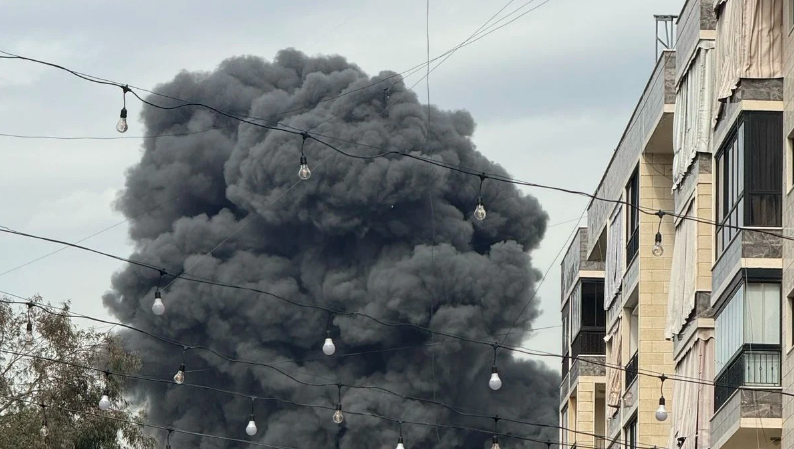
Lebanese-Israeli negotiations, mediated by the United States, are set to resume in a seventh round hosted in Rome from August 4th to 6th. This comes against the backdrop of increased tensions in southern Lebanon following Israel's response to Hezbollah's drone attack on its military vehicle by destroying tunnels underneath the Shkeif Castle. Israel has also threatened further retaliation against Hezbollah positions in the Ali al-Taher hills.
The "Rome-2" meeting, which involves political and military representatives from the signatories of the "Framework Agreement," is seen as a test of Washington's ability to restrain Israel’s aggressive actions. It is also an opportunity for the Lebanese delegation to reiterate demands for a ceasefire extension to cover all hostilities and to increase the breadth of experimental zones, potentially including towns still under Israeli occupation known as the "yellow line," which Israel has militarized.
A source directly involved in the negotiations stated that the delegation will advocate for the inclusion of symbolic cities like Bint Jbeil and Khiyam in the experimental zones. The source told "Asharq Al-Awsat" that Lebanon relies on the "Framework Agreement," backed by former President Donald Trump, to avoid further military escalations that would devastate the country.
The source argued that Washington holds unique leverage over Israel, particularly in halting its systematic destruction of homes along the "yellow line" and expanding the areas liberated from Israeli control. The source confirmed that Israel, pressured by the U.S., reluctantly joined the "Framework Agreement" despite its initial resistance to negotiations, betting that opposition would come from Lebanese leaders influenced by pro-Hezbollah factions; however, this bet did not materialize as expected.
In the Rome talks, a special mechanism might be established to verify the Lebanese army's control over the experimental zones, ensuring that Hezbollah forces do not enter the territories. The source revealed that strict measures have been enacted to assert state authority, suggesting that the verification team could be led by U.S. General Joseph Clarefield, who was recently scheduled to arrive in Beirut but had to attend a maritime defense conference in Saudi Arabia instead.
The source dismissed the likelihood of Hezbollah escalating its actions in support of Iran amid rising U.S.-Iran tensions, citing the different current circumstances and increased desire for stability within the Shiite community, as well as political pressures from Speaker Nabih Berri.
The Lebanese delegation enters the Rome negotiations counting on U.S. support following the Washington Summit between President Donald Trump and General Joseph Aoun. Lebanon hopes for tangible outcomes, particularly regarding the expansion of experimental zones to include occupied towns and holding Israel accountable for agreement breaches.
However, Israel's Prime Minister Benjamin Netanyahu's stance on retaining an "security zone" and Defense Minister Yisrael Katz's plans for the area remain obstacles. Lebanon seeks U.S. intervention to avoid the security zone's status being linked to upcoming Israeli elections.
Having complied with U.S. requests for direct talks, Lebanon looks to Washington to facilitate state sovereignty over its territory and to communicate to pro-Hezbollah factions that the official Lebanese stance is firm and non-negotiable. The outcome of the Rome talks could determine whether the "Framework Agreement" proceeds incrementally or remains stalled, leaving room for Hezbollah to justify maintaining its position.
Lebanon's Diplomatic Push at Rome Talks Amid Heightened Tensions with Israel
Share