


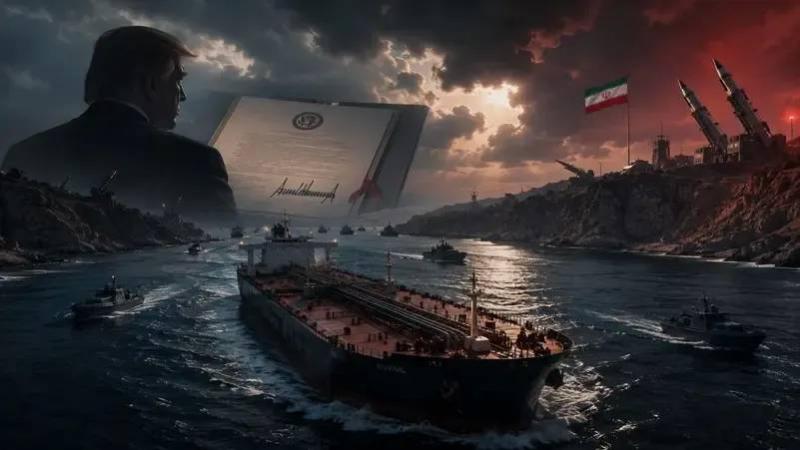
On Monday night, President Donald Trump affirmed ongoing talks with Iran, suggesting a potential full reopening of the Strait of Hormuz on Tuesday. Trump emphasized that current negotiations represent Iran's 'last chance' to finalize a beneficial agreement that would end the conflict persisting for five months, despite Tehran denying any ongoing or planned talks.
The conflicting statements highlight the slim prospects for a diplomatic resolution in the near future. When asked about the negotiation status at a White House event, Trump replied, "They are currently ongoing," indicating dialogue prompted by requests from Iran, Saudi Arabia, the UAE, Qatar, and other stakeholders.
He stressed it was Iran's final opportunity to sign a favorable document. In recent months, Trump has often announced plans for 'major attacks' on Iran, only to cancel them last minute.
Iranian Foreign Ministry spokesman Ismail Baghaei dismissed Trump's claims, stating there are no negotiations with the U.S., and no meetings are scheduled. He added that Iran has no plans to host foreign delegations or send negotiators abroad in the coming days.
Baghaei noted all Iranian negotiators are currently in the country, except for Foreign Minister Abbas Araghchi, who is on a religious visit to Iraq, with talks limited to Oman regarding managing the Strait of Hormuz.
An Iranian senior official told Reuters there's no plan for talks, with Araghchi unavailable at least until the end of the week.
Gulf officials and analysts believe Iran banks on sustaining against Washington longer by leveraging trade routes, shipping corridors, and energy infrastructure in the Middle East as pressure points, hoping to convince the U.S. and allies that containing the crisis is more costly than acceding to Iran's demands concerning the Strait of Hormuz.
Michael Knights of the Washington Institute remarked, "Their major advantage lies in their ability to cause harm to regional countries and the global economy."
Later Monday, Trump described Iranian leadership as "incredibly elusive" on Truth Social, claiming they requested a meeting, with further talks scheduled 'soon.' He reiterated the U.S. Navy's full control over the Strait of Hormuz, a vital passage previously accommodating a fifth of the world's oil and liquefied natural gas before the conflict.
He wrote, "The U.S. steel wall! Nothing gets through to Iran unless we permit it, and nothing traverses without an agreement or full capitulation."
Recurring Pattern
Today's developments align with a pattern seen since Trump launched 'Operation Epic Rage' with Israel over five months ago. Trump has repeatedly threatened military action only to back down, citing diplomatic communications as the reason.
Since early July, Iran has publicly refused to negotiate with Washington, following the collapse of a June memorandum aimed at ending the conflict.
Trump has yet to achieve his early war goals: dismantling Iran's nuclear program and limiting its regional aggression capacity. U.S. escalation has historically resulted in escalating Iranian reactions against American forces, Gulf allies, and navigation, with Trump retreating each time.
The Strait of Hormuz remains a significant conflict point. Washington claims the June memo obligates Iran to open the strategic passageway, while Tehran asserts it retains control over maritime movement.
Consequently, this grants Tehran greater leverage over the strait than before the war, viewed by observers as a substantial setback for Trump.
The U.S. has not succeeded in pressuring Iran to relinquish control, resulting in global oil price hikes and increased U.S. gasoline prices. Oil prices fell on Monday following Trump's recent decision to abstain from military action. Brent futures dropped roughly seven percent, settling at $83.77 per barrel, while the Dow Jones Index reached an all-time high closing level.