


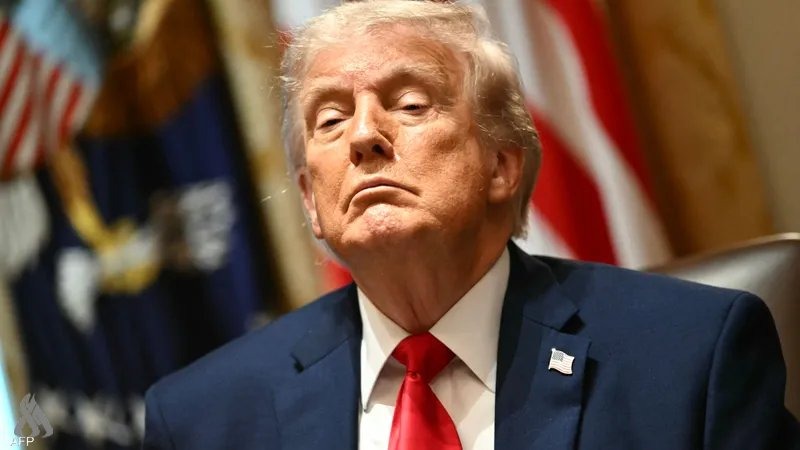
During his visit to Dublin, U.S. President Donald Trump sparked political controversy by expressing his support for the reunification of Ireland, calling it a "great thing" and predicting it will eventually happen. He added, "I think it will happen now."
Trump's comments were made during a joint press conference with Irish Prime Minister Micheál Martin, which evoked mixed reactions from political entities in Northern Ireland and the UK.
Aware of the issue's sensitivity, Trump prefaced his remarks by saying, "I don't want to cause any problems," then added, "but I would like to see it unified."
Trump described unifying the island as "a great badge of honor for everyone," stating, "It will happen eventually."
Further, he asserted, "I believe it will happen now."
"How could that be bad?"
Trump noted that the UK would naturally have a say in any constitutional changes involving Northern Ireland, but questioned, "How could that be bad?"
According to BBC, Trump's remarks surprised the attending journalists, as discussions on Irish unity were unexpected during the press conference, which also addressed the Middle East, energy, and international relations.
Unionists Outraged, Sinn Féin Welcomes Remarks
Trump's statements swiftly incited anger among unionist forces in Northern Ireland, who are committed to keeping the region part of the UK.
DUP Leader Gavin Robinson stated that Northern Ireland's constitutional future should be decided by its people, "not comments from London, Dublin, or Washington."
Traditional Unionist Voice Leader Jim Allister criticized Trump's comments, asserting that Northern Ireland "is not a pawn" in any disputes between Trump and the UK.
Conversely, Sinn Féin, proponents of Irish reunification, welcomed Trump's statements.
Party MP Donnchadh Ó Laoghaire remarked that Trump's comments on eventual unity come amid what he described as growing momentum towards unification.
London Reiterates Referendum Preconditions
In London, the British government reiterated its stance on Northern Ireland's constitutional status, asserting that a referendum on unity is contingent on indicators of majority support.
The government stressed that no referendum would take place unless circumstances change to show majority support for reunification.
The roots of Ireland's division trace back to the 1920s when most of the island became independent, while Northern Ireland remained part of the UK.
Subsequent decades in Northern Ireland saw sectarian and political conflict known as "The Troubles," which largely ended with the 1998 Good Friday Agreement.
The framework established by the agreement allows Northern Ireland to remain part of the UK unless a majority, through constitutional means, opts for a united Ireland.
Trump's comments carry extraordinary political sensitivity, directly impacting one of the most complex constitutional issues in relations between Britain, Ireland, and Northern Ireland.