


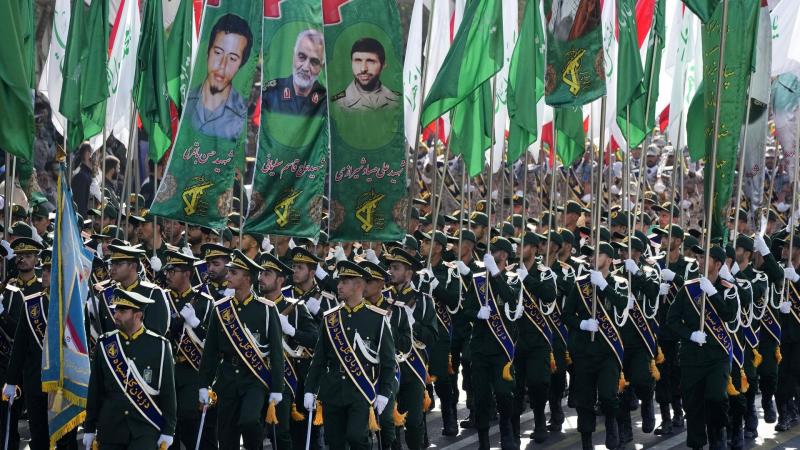
According to eight Iraqi sources cited by Reuters, Iran's Revolutionary Guard has created new secret cells in Iraq to conduct attacks on Gulf states hosting U.S. forces, circumventing established militant networks to avoid detection.
Three of the sources reported that these cells, composed of three to four groups consisting of about 10 elite Iraqi Shi'ite fighters each, have executed at least seven drone attacks from desert locations near the southern cities of Basra and Samawah, targeting sites in Kuwait, Saudi Arabia, and the UAE between April 20 and May 17.
Some members of these cells are part of the Islamic Resistance in Iraq, a coalition of hardline Shi'ite factions with thousands of fighters. However, these new groups operate outside of the established leadership structure and report directly to the Iranian Revolutionary Guard, according to sources including two Iraqi military officials, an Iraqi security official, and five local militant leaders.
The five militant leaders stated that the formation of these new cells in Iraq, previously undisclosed, reflects a strategic shift by the Revolutionary Guard to maintain Iran's influence in the region at a time when allied militant groups are significantly weakened and their military and economic resources depleted.
In predominantly Shi'ite Iraq, numerous militant factions maintain close ties to Tehran, serving as key components of the 'Axis of Resistance,' a regional alliance with Iran extending from Gaza and Lebanon to Yemen and Iraq.
Groups under the banner of the Islamic Resistance in Iraq have claimed responsibility for numerous drone and rocket attacks targeting U.S. interests in the country, prompting deadly airstrikes in retaliation since the U.S. and Israel began attacks on Iran on February 28. However, no large-scale mobilization of Iran-aligned groups within Iraq has occurred.
Since last year, several influential Shi'ite factions have signaled a willingness to disarm and refocus on domestic politics to avoid conflict escalation with the administration of U.S. President Donald Trump. Retired Iraqi army major general Jassim al-Bahadli and two lawmakers from the ruling Shi'ite coalition believe this development may have prompted the Iranian Revolutionary Guard to establish groups under their direct control.
This month, two such groups, Asa'ib Ahl al-Haq and Kata'ib Imam Ali, announced plans to surrender their weapons to state authorities following repeated U.S. warnings to the Iraqi government to dismantle active militant groups on its soil.
Bahaaldin, an expert on Shi'ite militant groups, noted that the newly established groups by the Revolutionary Guard appear to be smaller, ideologically more extreme, and under tighter control, reflecting Iran's need to conserve resources amid economic pressure.