


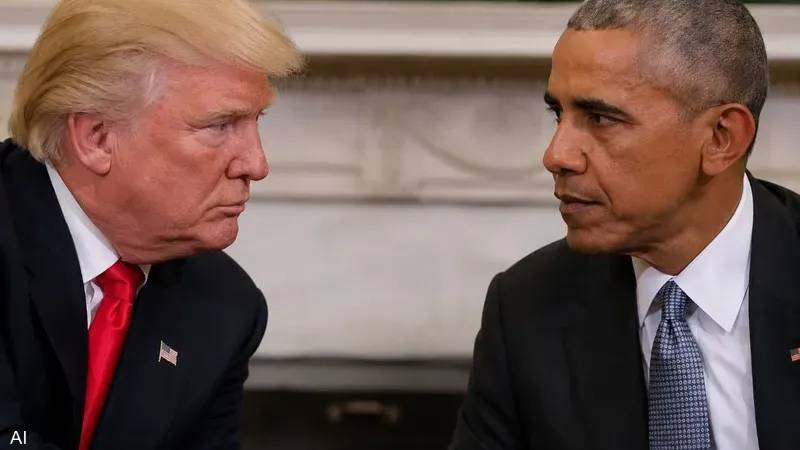
U.S. President Donald Trump insists that the agreement he reached with Iran is superior to the one former President Barack Obama brokered in 2015. However, Trump's critics argue that his gains are significantly less than Obama's, while the concessions made to Tehran are greater.
Here is a comparison of the two agreements:
Content
The agreements are vastly different. Trump's memorandum with Iran is not a final agreement but a one-and-a-half-page framework comprising 14 points, negotiated sporadically over weeks.
This memorandum initiated a 60-day negotiation period aimed at a comprehensive settlement of a nearly four-month-long conflict, though many obstacles remain on issues such as Iran's nuclear program, sanctions relief, and the future of the Strait of Hormuz.
Obama's agreement, titled the Joint Comprehensive Plan of Action (JCPOA), was a detailed final document spanning over 160 pages. It focused narrowly on limiting Iran's nuclear activities while imposing strict criteria.
Trump withdrew from the agreement in 2018, labeling it as flawed.
While Trump's approach relied on bilateral negotiations between the U.S. and Iran, Obama involved China, France, Germany, Russia, Britain, and the European Union in talks that lasted nearly two years.
Nuclear Program
Both agreements included a written commitment from Iran never to pursue a nuclear weapon, although Trump claims Tehran never made such a pledge, citing nuclear threat concerns as a primary reason for engaging in conflict.
The Obama deal imposed strict limitations on Iran's efforts to produce weapons-grade uranium, extending the "breakout" period needed to develop a bomb.
The U.S. government stated that Tehran complied with the agreement until Trump exited the JCPOA.
Trump's interim agreement outlined only a general path to curb Iran's nuclear activities, without specific commitments from Tehran other than discussing nuclear issues during the 60-day period.
The agreement points to Iran's willingness to resolve the dispute over its enriched uranium stockpile, potentially "downblending" materials under International Atomic Energy Agency supervision, but leaves this decision for a final agreement.
The JCPOA included extensive international inspections, whereas the memorandum avoids reinstating such processes.
Sanctions and Frozen Assets
Both agreements involve sanction relief and the release of frozen assets but through vastly different methods. Iran is now more eager than ever to stabilize its struggling economy.
Obama eased some sanctions early, contingent on signing a comprehensive deal, with further relief following verified Iranian compliance.
Trump's memorandum eased sanctions first, allowing Iran to immediately export oil, and deferred negotiating a final package.
The memo also opens the possibility of unfreezing billions of dollars in assets without specifying when this might occur.
Another clause calls for the U.S. and its Middle Eastern allies to establish a $300 billion fund for Iran's economic development, though its conditions and timeline remain ambiguous.
This has sparked criticism from anti-Iran figures within Trump's own Republican Party, who see him making excessive concessions.
For years, Trump criticized Obama for returning $1.7 billion in frozen arms sale proceeds to Tehran. Yet, it now appears that Trump, who disdains any comparison between his deal and Obama's, may offer Iran significantly more funds.
Strait of Hormuz
The JCPOA tackled only nuclear issues, a deliberate choice by Obama's administration to avoid regional complexities complicating a final deal.
Trump's memorandum represents a diplomatic starting point to end the war launched alongside Israel on February 28, which shook the global economy.
One key focus of the current deal is reopening the Strait of Hormuz, a vital oil shipping lane that Iran had virtually closed since the conflict began.
Iran now insists on an administrative role in the strait, one it did not have before the war, which could become a sticking point in future negotiations.