


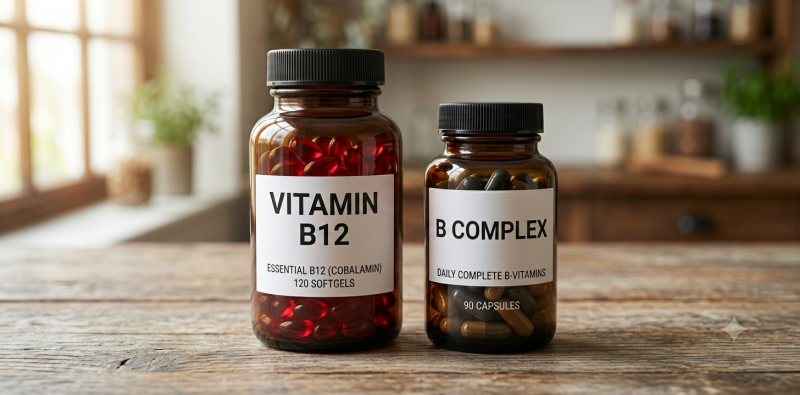
Many individuals often wonder about the distinction between Vitamin B12 and B Complex, especially those seeking supplements to boost energy, combat fatigue, or support nerve health. While both belong to the same family of B vitamins, they are not identical. Vitamin B12 is a specific element within this group, whereas B Complex is a supplement that combines several B vitamins into one product.
This difference is crucial when selecting the right supplement. Some conditions specifically require B12 due to a deficiency or absorption issues, while others benefit more from B Complex for overall energy support or to address broader nutritional gaps involving multiple B vitamins.
What is Vitamin B12?
Vitamin B12, also known as cobalamin, is an essential B vitamin. It plays a critical role in forming red blood cells, maintaining nerve health, and producing DNA. A deficiency can lead to anemia and neurological symptoms like numbness, poor concentration, and fatigue. According to Mayo Clinic, B12 is necessary for healthy nerve cells, blood formation, and DNA synthesis.
B12 is naturally found in meats, fish, eggs, and dairy products, making strict vegetarians, the elderly, and those with certain digestive issues more susceptible to deficiency.

What is B Complex?
B Complex is not a single vitamin but a combination of eight B vitamins, including:
- B1 Thiamine
- B2 Riboflavin
- B3 Niacin
- B5 Pantothenic Acid
- B6 Pyridoxine
- B7 Biotin
- B9 Folate or Folic Acid
- B12 Cobalamin
This group supports several bodily functions, notably converting food into energy, supporting metabolism, forming blood cells, and maintaining nervous system, skin, and hair health. As mentioned by WebMD, B Complex combines eight vitamins in one supplement, often used when multiple B vitamin support is needed.
Differences Between Vitamin B12 and B Complex
To clarify, differences can be categorized as follows:
1) Composition Difference
The primary difference is that Vitamin B12 contains only cobalamin, while B Complex includes eight combined B vitamins, including B12. Thus, B12 is part of B Complex but not the whole supplement itself.
2) Functional and Benefit Differences
Vitamin B12 primarily focuses on three key functions: red blood cell production, nerve support, and DNA production. It's often associated with conditions like anemia and nerve damage due to deficiency.
Conversely, B Complex offers broader support, as each vitamin within plays different roles. Some aid in energy production from food, others support nerves, while some contribute to skin and hair health, immunity, and blood formation. It's more comprehensive when addressing general stress, poor nutrition, or multiple B vitamin deficiencies.
3) Usage Indications
Vitamin B12 is typically used when there's a confirmed deficiency or strong suspicion of it, such as in:
- Anemia from B12 deficiency
- Numbness and tingling sensations
- Vegetarians lacking sufficient animal sources
- The elderly
People with poor absorption or digestive issues
B Complex is often prescribed when the need is broader, like:
- General malnutrition
- During periods of stress and fatigue
- Nutritional support requiring multiple elements
- Those deficient in more than one B vitamin
A crucial point is if tests show a specific B12 deficiency, taking B12 alone might be ideal rather than using B Complex randomly. If the goal is overall support or multiple nutritional deficiencies, B Complex might be more practical.

4) Availability Differences
Vitamin B12 is available in several forms, including:
- Oral tablets
- Sublingual tablets
- Nasal spray or gel in some products
- Intramuscular or subcutaneous injections for severe deficiency or absorption issues
B Complex is commonly available as:
- Capsules or tablets
- Oral syrup
And in some cases, injections, albeit less common compared to individual B12 shots.
Which is Better: B12 or B Complex?
The answer varies based on the reason for use. If there’s a confirmed B12 deficiency or symptoms align with it, such as numbness, anemia, or extreme fatigue, B12 alone might be more appropriate. For generalized energy and metabolism support or broader nutritional deficiencies, B Complex may be more beneficial.
Most importantly, supplements shouldn’t replace proper diagnosis. Fatigue, numbness, or concentration issues could stem from B12 deficiency, iron deficiency, thyroid issues, or other reasons. Thus, testing and medical evaluation remain key before choosing a supplement.
In conclusion, if suffering from persistent fatigue, numbness, anemia, or following a diet that could lead to B12 deficiency, it’s advisable to consult a doctor or pharmacist and conduct necessary tests before starting any supplement. Correct product selection from the start helps address the issue more accurately, avoiding unnecessary supplements.
Related Articles
Iron Deficiency and Heart Palpitations
Does Vitamin B12 Deficiency Cause Dizziness and Continual Fatigue?
Normal Iron Levels in Blood and when Deficiency Becomes Critical?