


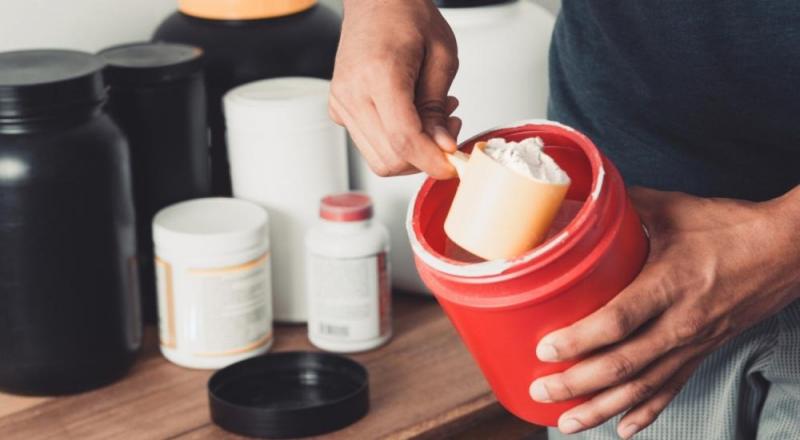
Creatine is among the most commonly used dietary supplements by athletes and bodybuilders. It is renowned for its role in enhancing performance during high-intensity exercises, increasing strength, and supporting muscle mass growth when used in conjunction with an appropriate training program.
Despite its benefits, numerous questions have arisen about whether creatine causes hair loss, especially given circulating information linking it to increased levels of the hormone Dihydrotestosterone (DHT), which is associated with genetic baldness. But do studies confirm this claim?
Does Creatine Cause Hair Loss?
Currently, there is no strong scientific evidence proving that creatine directly causes hair loss.
This notion stems from a small 2009 study on a group of rugby players that indicated increased DHT levels after creatine consumption. However, the study:

- Included a limited number of participants.
- Did not assess actual hair loss occurrence.
- Did not prove that hormone elevation led to hair loss.
Since then, larger studies have not confirmed a direct link between creatine use and hair loss.
The Connection Between Creatine and DHT Hormone
DHT is a derivative of testosterone and is associated with genetic baldness in individuals with a genetic predisposition.
Some hypotheses suggest that elevated levels may accelerate hair loss in those suffering from androgenetic alopecia (genetic baldness), but there isn't enough evidence to confirm that creatine significantly elevates this hormone enough to cause hair loss.
Thus, it cannot be conclusively said that taking creatine increases the risk of baldness.
Why Do Some People Notice Hair Loss While Using Creatine?
Hair loss might occur concurrently with creatine use, but this does not necessarily mean the supplement is the culprit. Other factors could include:
1. Genetic Baldness
Genetic factors are the most common cause of hair loss in men, which may begin to emerge in youth regardless of supplement use.
2. Stress and Fatigue
Mental stress or physical fatigue from intensive training may temporarily increase hair shedding.
3. Poor Nutrition
A deficiency in certain nutrients, like iron, zinc, protein, and vitamin D, could lead to hair loss.
4. Hormonal Changes
Hormonal disturbances or certain illnesses may affect hair growth cycles, leading to increased shedding.
Should You Stop Taking Creatine?
If you are using creatine at the recommended doses and are not experiencing side effects, there is no general recommendation to stop due to fear of hair loss.
However, if you notice a significant increase in hair shedding, it is advisable to consult with a doctor or dermatologist to determine the cause, especially if there is a family history of genetic baldness.
Is Creatine Safe?
For most healthy adults, creatine is among the most scientifically studied dietary supplements and is considered safe when used at recommended doses.
Nevertheless, consulting with a doctor before using it is advised in the following cases:
- Kidney disease.
- Pregnancy or breastfeeding.
- Medication affecting kidney function.
- Chronic illnesses requiring medical supervision.
Tips for Maintaining Hair Health
To help reduce hair loss, it is advised to:
- Consume a balanced diet rich in proteins, vitamins, and minerals.
- Ensure sufficient intake of iron, zinc, and vitamin D as needed.
- Avoid chronic stress as much as possible.
- Care for the scalp and hair.
- Consult a doctor if hair loss persists or increases significantly.
See Also:
Can Creatine Be Mixed with Protein?
Vitamin B12 Deficiency and Numbness
How to Use Creatine for Beginners