


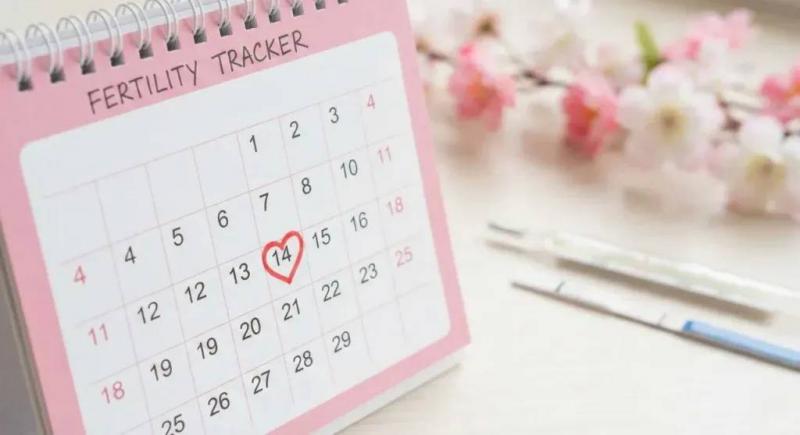
Many women seek ways to calculate their ovulation days either to increase pregnancy chances or to track their menstrual cycle and understand hormonal changes throughout the month. Ovulation is when the ovary releases a mature egg ready for fertilization, marking the most fertile period of the menstrual cycle.
Additionally, pinpointing ovulation helps women understand their bodies better and monitor natural signs associated with hormonal changes. Various methods exist for estimating ovulation, providing a close approximation for most women.
What is Ovulation?
Ovulation is the release of a mature egg from an ovary to travel through the fallopian tube, where it may be fertilized by sperm. This occurs once per menstrual cycle and varies by cycle length and regularity.
Importance of Ovulation Days
The ovulation phase is pivotal for fertility as pregnancy chances are highest. Understanding ovulation aids in:
-Increasing pregnancy chances.
-Grasping the menstrual cycle pattern.
-Monitoring reproductive health.
-Detecting potential ovulation disorders.
Calculating Ovulation Days for Regular Cycles

If the cycle is 28 days
Ovulation typically occurs on day 14 of the menstrual cycle.
Example:
-Cycle start: the 1st of the month.
-Next cycle start: the 28th of the month.
-Expected ovulation: day 14.
If the cycle is 30 days
Ovulation generally happens on day 16.
Example:
-Cycle length: 30 days.
-Expected ovulation: day 16.
If the cycle is 32 days
Ovulation often occurs on day 18, with longer cycles delaying ovulation slightly.
What is the Fertility Window?
Fertility isn’t limited to ovulation day; the "fertility window" includes:
-The day of ovulation.
-The five preceding days.
This is because sperm can live in the reproductive tract for up to five days, and the egg survives 12 to 24 hours after release, providing the optimal pregnancy period.
Natural Ovulation Indicators
Cervical Mucus Changes
A common sign is clear, stretchy discharge like raw egg whites, aiding sperm mobility towards the egg, increasing before ovulation.
Basal Body Temperature Rise
Post-ovulation, basal body temperature slightly rises, often between 0.2 and 0.5°C.
For accurate results:
-Measure daily.
-Upon waking.
-Use a precise thermometer.
-Regularly log temperatures.
Tracking for months enhances ovulation pattern understanding.
Ovulation Pain
Some women feel slight pain or twinge on one lower abdomen side during egg release, lasting hours to a day. Though not common to all, it aids some in determining fertility.
Home Ovulation Tests
Functionality
Home ovulation tests measure the luteinizing hormone (LH) in urine, spiking before ovulation.
Test Utilization
Similar to home pregnancy tests, a positive indicates ovulation will occur in the next 24–36 hours, marking the prime time for pregnancy.
Advantages of Ovulation Tests
-User-friendly.
-Pharmacy available.
-Quick results.
-Precisely determines the fertility window.
Calculating Ovulation for Irregular Cycles
Track Cycles Over Months
Log each cycle's start to detect a general ovulation pattern.
Monitor Discharge and Temperature
Combining physical signs offers a clearer ovulation window picture.
Utilize Ovulation Tests
More beneficial for irregular cycle women.
Consult a Doctor
If cycles are highly irregular or infrequent, medical evaluation may be necessary.
Common Ovulation Calculation Mistakes
Relying on Day 14 for All
Not all women ovulate on day 14; it depends on cycle length.
Overlooking Fertility Window
Many pregnancies result from intercourse days before ovulation, not just on ovulation day.
Ignoring Body Changes
Discharge and temperature offer crucial cues not to be overlooked.
Lack of Ongoing Tracking
Longer cycle monitoring enhances prediction accuracy.
When to See a Doctor?
See a gynecologist if:
-Cycles are consistently irregular.
-Pregnancy doesn't occur after long attempts.
-There are signs of hormonal disorders.
-Known issues like polycystic ovaries exist.
In conclusion, several factors determine ovulation calculation, including cycle length, monitoring natural body signals, and using home ovulation tests. While calculations estimate ovulation in regular cycles, using multiple methods offers greater accuracy.
Understanding the fertility window and monitoring monthly changes can help women better manage reproductive health and increase pregnancy chances if desired.
See also
How to Grow Hair Quickly