


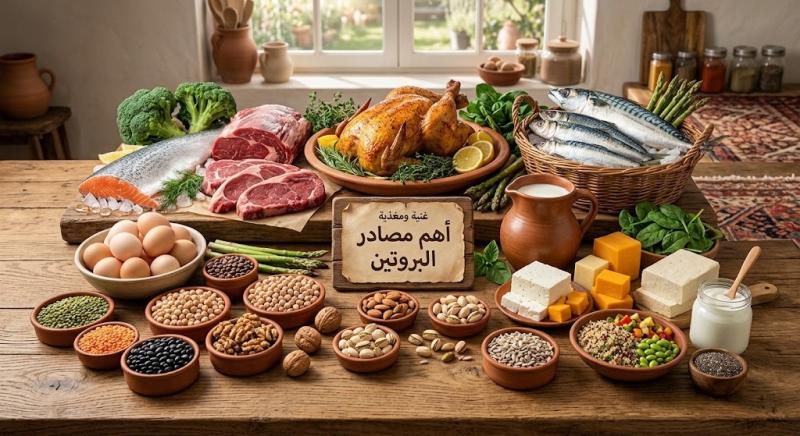
Protein is an essential nutrient that the body needs to help build tissues and muscles, produce enzymes and hormones, and support various vital functions. Hence, it is important to obtain it as part of a balanced diet from diverse sources rather than relying on just one type of food.
Natural sources of protein are available in both animal and plant foods. Choosing the right source depends not only on the amount of protein but also on its content of fats, fibers, vitamins, and minerals.
Best Natural Sources of Protein:

1. Eggs
Eggs are one of the most popular natural sources of protein. They also contain a range of important nutrients. Eggs offer high-quality protein and can be easily included in breakfast, lunch, or dinner. They can be prepared in multiple ways, but it is advisable to avoid adding large amounts of fat when cooking them.
The amount of protein varies depending on the size of the egg, but a single egg usually provides a good amount of protein within a balanced meal.
2. Chicken Breasts
Chicken breasts are a common source of protein, especially when opting for the lean parts and removing the skin. They can be prepared by grilling, baking, or boiling and added to salads, rice, or main dishes. Diversifying protein sources and not relying solely on chicken aids in obtaining a variety of nutrients.
3. Fish
Fish combines protein with other nutrients, and fatty types such as salmon, sardines, and mackerel provide beneficial fatty acids. Fish is a good option to incorporate protein into the diet, and they can be grilled or baked instead of fried. It's better to vary among different types of fish to gain different nutritional benefits.
4. Low-Fat Meat
Lean red meat can be a good source of protein and also contains elements like iron, vitamin B12, and zinc. It's best to choose lean cuts and consume in moderation while also relying on other protein sources like fish, legumes, and poultry.
5. Yogurt and Milk
Yogurt and milk provide protein along with calcium and other nutrients. High-protein yogurt can be a suitable option to increase protein intake, especially when consumed with fruits, oats, or nuts. It's best to choose varieties with less added sugar.

6. Lentils
Lentils are one of the best plant-based sources of protein. They also contain fibers, iron, and a range of nutrients. Lentils can be used in soups, salads, or main dishes and can be a suitable alternative for some animal protein sources in the diet. Lentils provide protein along with a good amount of fiber, which helps increase satiety.
7. Chickpeas
Chickpeas contain plant-based protein and fiber and can be consumed in multiple forms in the diet. They can be added to salads, soups, or made into a side dish and used in dishes relying on legumes. It's important to be mindful of additives in chickpea preparations since some recipes may contain high amounts of fats or salt.
8. Beans
Beans are available in various types and are a good source of plant protein and fiber. White, red, or black beans can be included in salads, soups, and main dishes. Regular consumption of legumes in a balanced diet aids in increasing the diversity of protein sources.
9. Nuts
Nuts like almonds, walnuts, and pistachios provide protein along with unsaturated fats and some vitamins and minerals. A small handful can be eaten as a snack or added to oatmeal, yogurt, and salads. However, nuts are calorie-dense, so it's best to consume them in moderation and choose unsalted varieties whenever possible.
10. Seeds
Seeds such as pumpkin, sesame, and chia are plant sources containing protein, unsaturated fats, and other nutrients. They can be added to salads, yogurt, or oatmeal, offering an easy way to enhance the nutritional value of a meal.
Is Plant-Based Protein Sufficient for the Body?
With good diet planning, protein needs can be met from plant sources. Legumes, nuts, seeds, and whole grains offer various amino acid profiles, and diversifying among them improves the quality of consumed protein. Most people do not need to eat all protein sources in a single meal; diversity can be achieved throughout the day.
How Much Protein Does the Body Need Daily?
Protein needs vary from person to person depending on multiple factors.
Age and Weight
The protein requirement varies with body weight and age, with possible increased needs during growth stages and certain physiological stages.
Physical Activity Level
Individuals engaging in regular physical activity, especially resistance exercises, might need different protein amounts compared to less active individuals.
Health Condition
Certain health conditions can influence the appropriate protein quantity. People with kidney disease or chronic illnesses should consult a doctor or nutritionist before significantly increasing protein intake.
See Also:
Does Lack of Sleep Cause Weight Gain?